
 Алгебра
 Английский
 Биология
 География
 Геометрия
 История
 Русский
 Обществознание
 Физика
 Химия
 Информатика
 Литература
 Математика
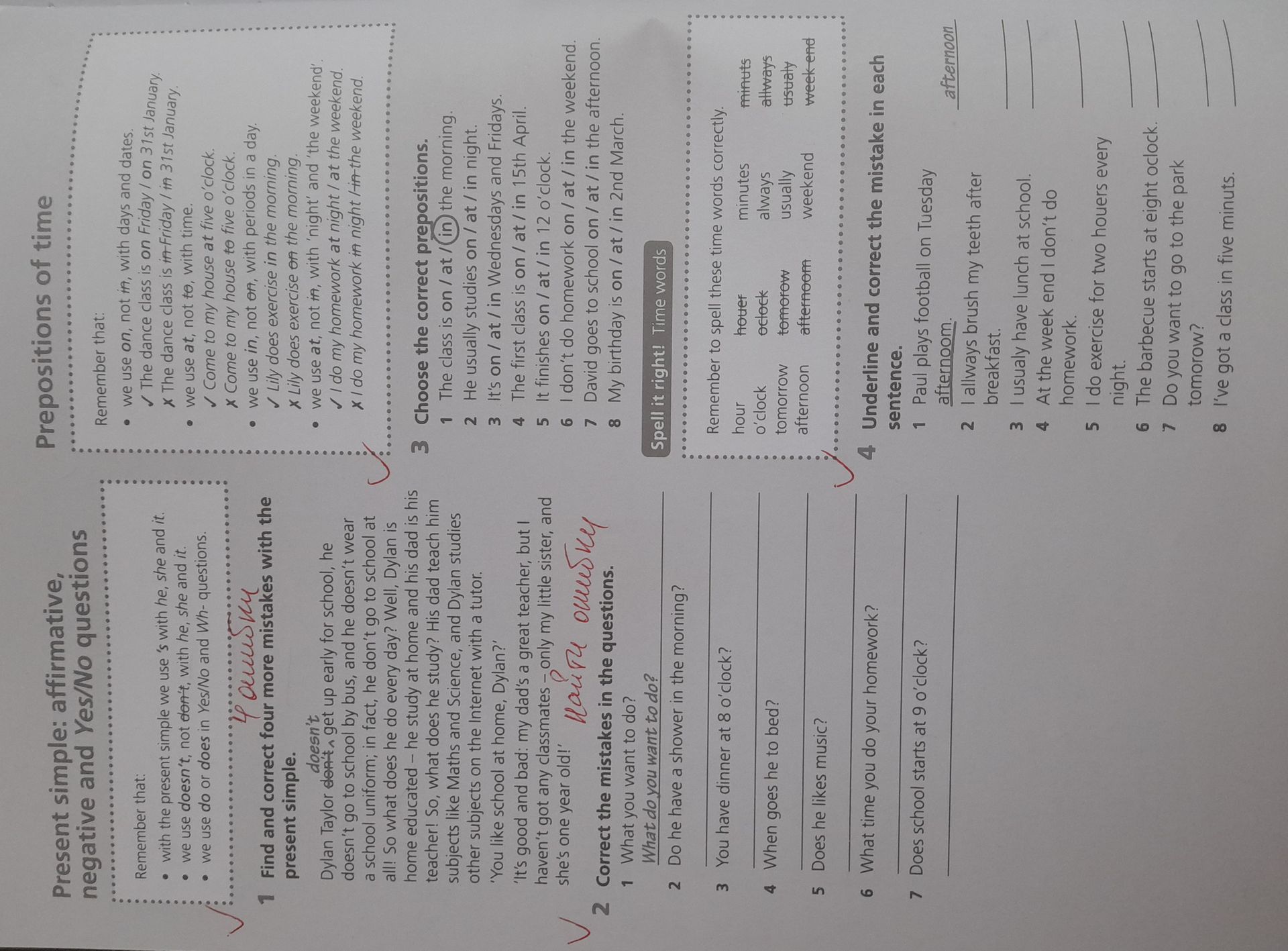
Ответ:
В Present Simple после he в утвердительном предложении к смысловому глаголу добавляется окончание -s/-es. В отрицании употребляется doesn’t, поэтому у смыслового глагола после него окончание не добавляется.
- he doesn’t go → he doesn’t go — эта форма уже правильная.
- he don’t go → he doesn’t go.
- he study → he studies.
- His dad teach → His dad teaches.
Исправленный текст: Dylan Taylor doesn’t get up early for school, he doesn’t go to school by bus, and he doesn’t wear a school uniform; in fact, he doesn’t go to school at all. So what does he do every day? Well, Dylan is home educated – he studies at home and his dad is his teacher. So, what does he study? His dad teaches him subjects like Maths and Science, and Dylan studies other subjects on the Internet with a tutor. ‘You like school at home, Dylan?’ ‘It’s good and bad: my dad’s a great teacher, but I haven’t got any classmates – only my little sister, and she’s one year old!’
