
 Алгебра
 Английский
 Биология
 География
 Геометрия
 История
 Русский
 Обществознание
 Физика
 Химия
 Информатика
 Литература
 Математика
Ответ:
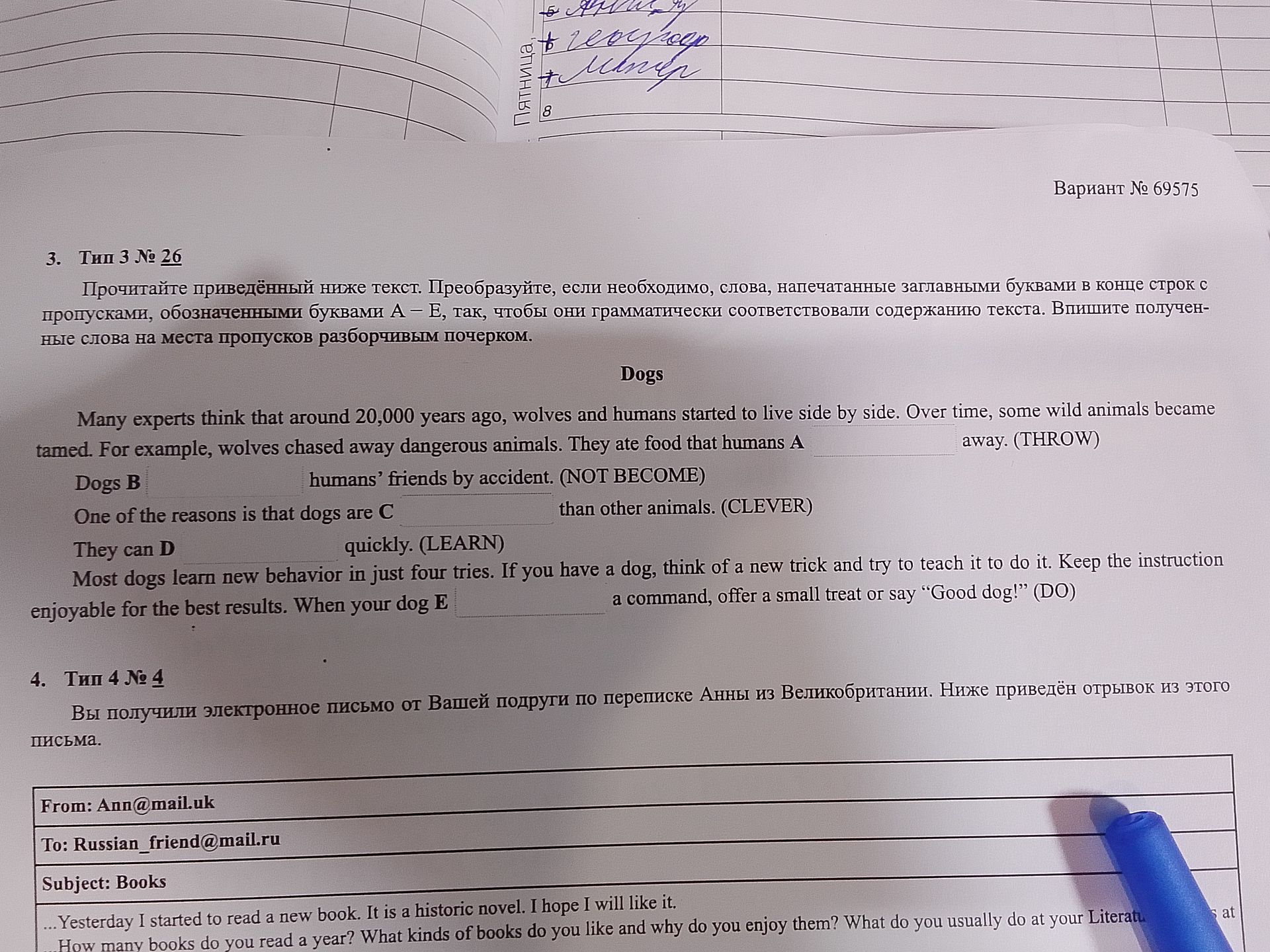
Translation of the task: Read the text below. If necessary, change the words in capital letters at the ends of the lines so that they grammatically fit the text. Write the resulting words in the gaps.
Completed text:
Many experts think that around 20,000 years ago, wolves and humans started to live side by side. Over time, some wild animals became tamed. For example, wolves chased away dangerous animals. They ate food that humans threw away. Dogs did not become humans’ friends by accident. One of the reasons is that dogs are cleverer than other animals. They can learn quickly. Most dogs learn new behavior in just four tries. If you have a dog, think of a new trick and try to teach it to do it. Keep the instruction enjoyable for the best results. When your dog does a command, offer a small treat or say “Good dog!”
A: threw — Past Simple, because the sentence describes what happened in the past. B: did not become — negative Past Simple. C: cleverer — comparative form after than. D: learn — infinitive without to after the modal verb can. E: does — Present Simple, third-person singular.
Перевод задания: Прочитайте приведённый ниже текст. При необходимости измените слова, напечатанные заглавными буквами в конце строк, чтобы они грамматически подходили к тексту. Впишите полученные слова в пропуски.
Перевод заполненного текста:
Многие специалисты считают, что около 20 000 лет назад волки и люди начали жить бок о бок. Со временем некоторые дикие животные были приручены. Например, волки прогоняли опасных животных. Они ели пищу, которую люди выбрасывали. Собаки не стали друзьями людей случайно. Одна из причин заключается в том, что собаки сообразительнее других животных. Они могут быстро учиться. Большинство собак усваивают новое поведение всего за четыре попытки. Если у вас есть собака, придумайте новый трюк и попробуйте научить её выполнять его. Для лучшего результата сделайте обучение приятным. Когда ваша собака выполнит команду, дайте ей небольшое лакомство или скажите: «Хорошая собака!»
Пояснение: A — threw, прошедшее время; B — did not become, отрицание в Past Simple; C — cleverer, сравнительная степень после than; D — learn, начальная форма после can; E — does, форма Present Simple для третьего лица единственного числа.
