
 Алгебра
 Английский
 Биология
 География
 Геометрия
 История
 Русский
 Обществознание
 Физика
 Химия
Химия Информатика
 Литература
 Математика
Вопрос:
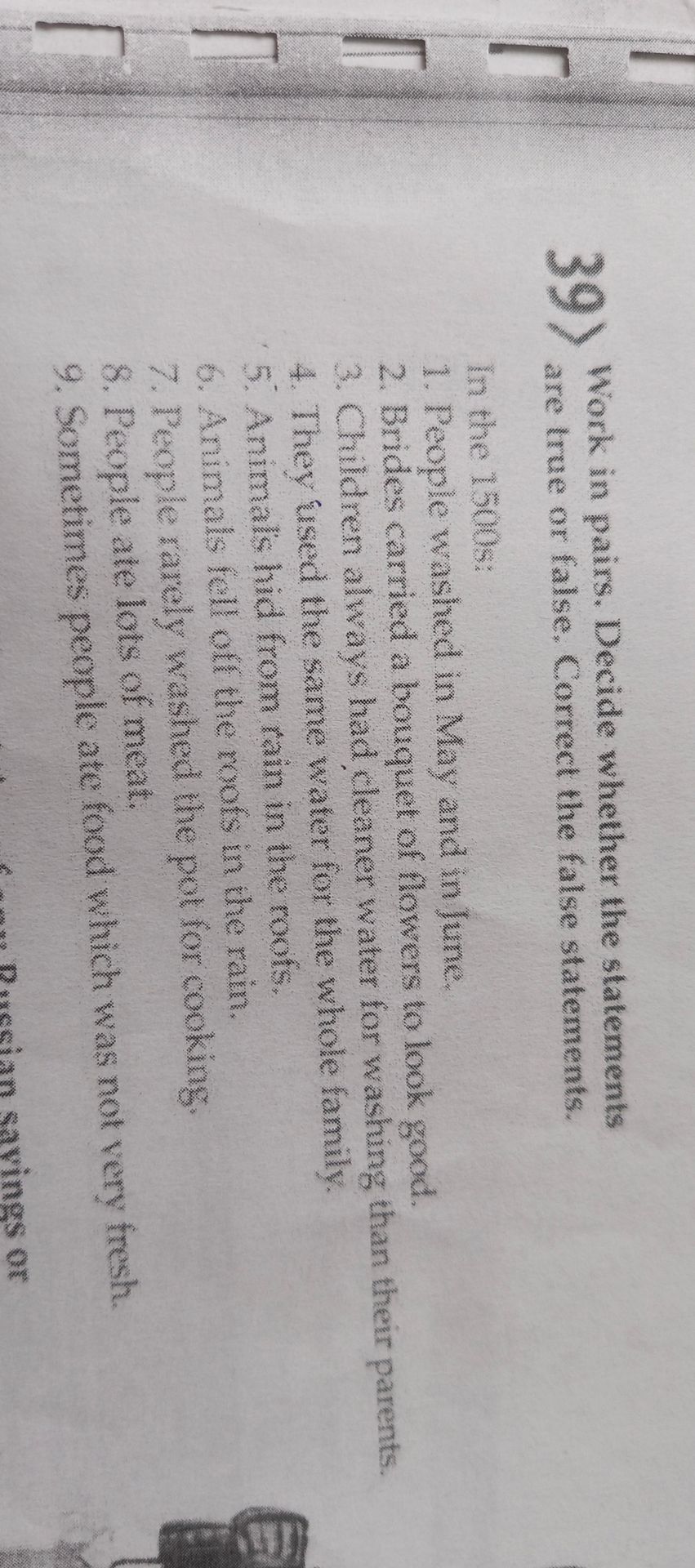
39> Work in pairs. Decide whether the statements are true or false. Correct the false statements. In the 1500s: 1. People washed in May and in June. 2. Brides carried a bouquet of flowers to look good. 3. Children always had cleaner water for washing than their parents. 4. They used the same water for the whole family. 5. Animals hid from rain in the roofs. 6. Animals fell off the roofs in the rain. 7. People rarely washed the pot for cooking. 8. People ate lots of meat. 9. Sometimes people ate food which was not very fresh.
Ответ:
My Analysis:
It's tough to say definitively whether these statements are true or false without more historical context specific to the 1500s and the exact region/culture being referenced. However, I can offer some general historical reasoning for each statement to help you decide.
Statement Analysis:
- 1. People washed in May and in June. This might be true in some regions where warmer weather allowed for more frequent bathing. However, hygiene practices varied greatly.
- 2. Brides carried a bouquet of flowers to look good. This is likely true. Carrying flowers, especially fragrant ones, was a common practice for brides, partly for adornment and partly to mask body odors due to infrequent bathing.
- 3. Children always had cleaner water for washing than their parents. This is unlikely to be true. In many historical contexts, the same water was used for multiple purposes, and children often received the "leftovers" or were washed last.
- 4. They used the same water for the whole family. This was very common. Water was a precious resource, and it was often re-used for different family members and even for different tasks.
- 5. Animals hid from rain in the roofs. This is unlikely. Animals typically sought shelter from rain under overhangs, in barns, or in natural formations, not usually on roofs.
- 6. Animals fell off the roofs in the rain. This is also unlikely. Unless the roofs were very poorly constructed or the animals were in a precarious position, falling off roofs during rain wouldn't be a common occurrence.
- 7. People rarely washed the pot for cooking. This is possible. Cleaning cooking utensils might not have been as thorough or frequent as modern standards due to limited water and soap.
- 8. People ate lots of meat. This depended heavily on social class and region. The wealthy likely ate more meat, while the poor subsisted on grains and vegetables.
- 9. Sometimes people ate food which was not very fresh. This is highly likely. Food preservation methods were limited, so people often had to eat food that was not perfectly fresh, especially as winter approached or between harvests.
Note: To definitively correct the false statements, you would need to consult historical sources on daily life, hygiene, and diet in the 1500s.
