
 Алгебра
 Английский
 Биология
 География
 Геометрия
 История
 Русский
 Обществознание
 Физика
 Химия
Химия Информатика
 Литература
 Математика
Вопрос:
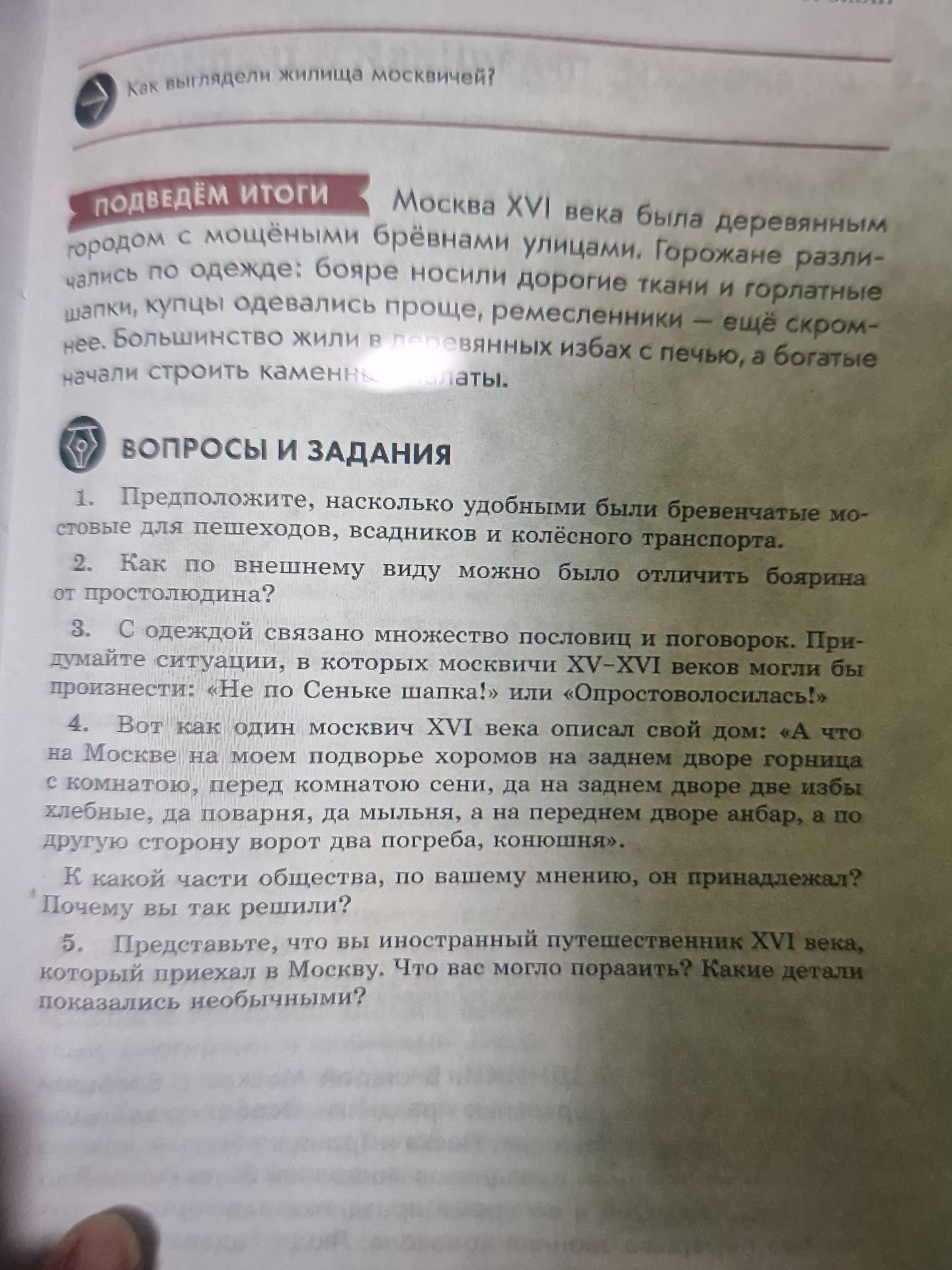
4. Here is how one Muscovite of the 16th century described his house: "And as for Moscow, on my courtyard, there are chambers in the back yard: a room, in front of the room, a hallway, and in the back yard, two huts, a pantry, a laundry room, and in the front yard, a granary, and on the other side of the gate, two cellars, a stable." To what part of society, in your opinion, did he belong? Why did you decide so?
Ответ:
The question:
- 4. Here is how one Muscovite of the 16th century described his house: "And as for Moscow, on my courtyard, there are chambers in the back yard: a room, in front of the room, a hallway, and in the back yard, two huts, a pantry, a laundry room, and in the front yard, a granary, and on the other side of the gate, two cellars, a stable." To what part of society, in your opinion, did he belong? Why did you decide so?
Answer:
Based on the description of the house, this Muscovite likely belonged to the merchant class or a wealthy artisan.
- Reasoning: The description mentions a courtyard with multiple structures: a main chamber with a room and hallway, two additional huts, a pantry, a laundry room, a granary, and two cellars, as well as a stable. This indicates a substantial property with dedicated service areas and storage, suggesting a level of wealth beyond that of a common craftsman or peasant. The presence of a granary and cellars points towards activities related to trade or large-scale production/storage, characteristic of merchants or prosperous artisans. The term "chambers" (хоромов) can refer to living quarters, and having multiple such structures, alongside specialized rooms like a pantry and laundry, suggests a significant household. It's less likely to be a boyar, as boyar residences were often described with more emphasis on their status and possibly stone construction (as mentioned in the introductory text for the wealthy).
Summary: The answer classifies the social status of the described house owner based on the size and amenities of their property, inferring they were likely a merchant or a wealthy artisan.
Похожие
- How did the houses of Muscovites look?
- 1. How convenient were the log pavements for pedestrians, horsemen, and wheeled transport?
- 2. How could a boyar be distinguished from a commoner by appearance?
- 3. Clothing is associated with many proverbs and sayings. Think of situations where Muscovites of the 15th-16th centuries might have said: "The hat doesn't fit the man!" or "He made a fool of himself!"
- 5. Imagine you are a foreign traveler of the 16th century who has arrived in Moscow. What could have surprised you? What details seemed unusual?
