
 Алгебра
 Английский
 Биология
 География
 Геометрия
 История
 Русский
 Обществознание
 Физика
 Химия
 Информатика
 Литература
 Математика
Ответ:
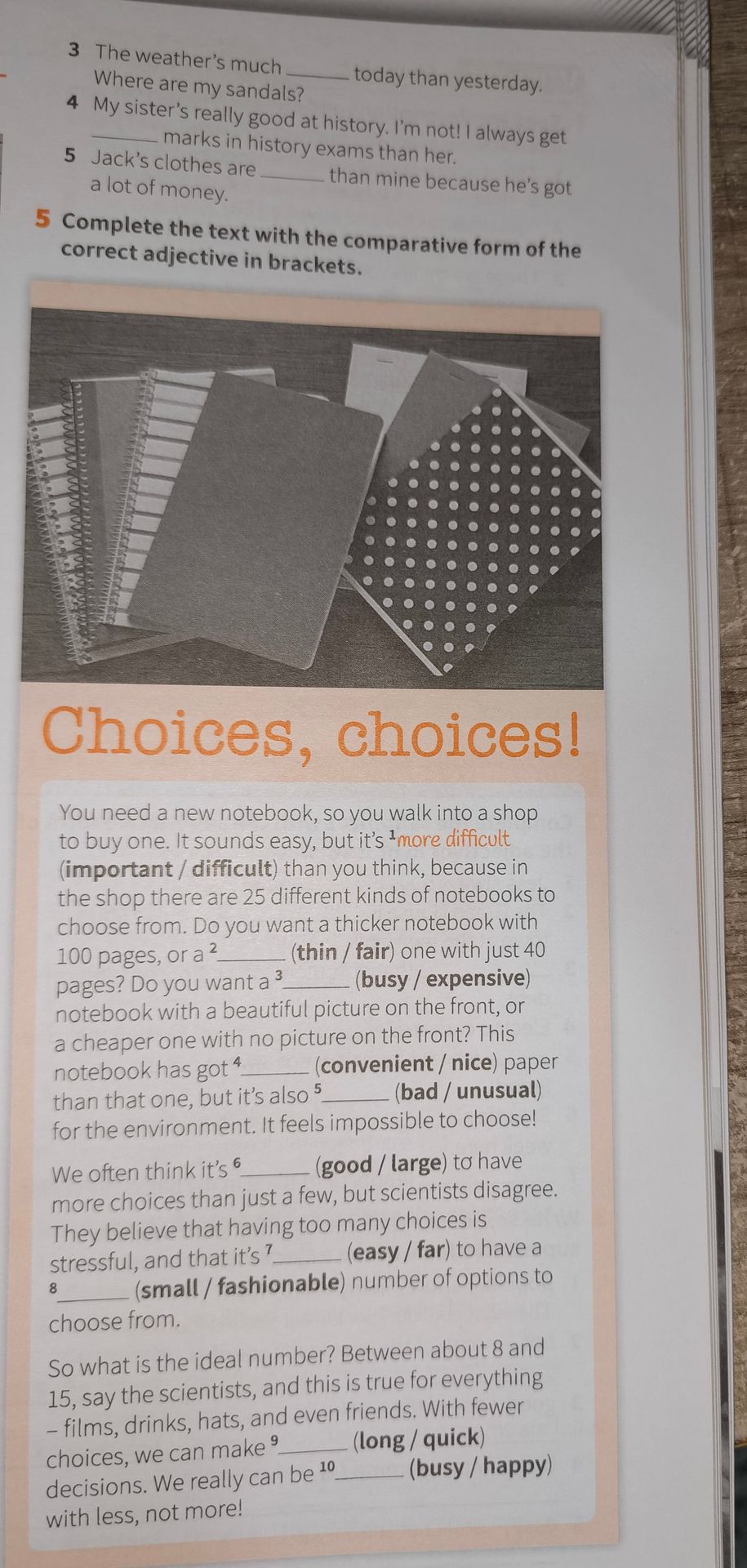
Перевод задания: Заполните текст сравнительной формой подходящего прилагательного в скобках.
1. more difficult (труднее) — выбираем по смыслу: сделать выбор труднее, чем кажется.
2. thinner (более тонкую) — сравнение толщины блокнотов.
3. more expensive (более дорогой) — противопоставление более дорогого блокнота дешёвому.
4. nicer (более хорошая, качественная) — сравнение качества бумаги.
5. worse (хуже) — бумага хуже для окружающей среды.
6. better (лучше) — форма сравнения от good.
7. harder (труднее) — иметь слишком много вариантов труднее.
8. smaller (меньшее) — речь идёт о меньшем количестве вариантов.
9. quicker (более быстрые) — с меньшим количеством вариантов решения принимаются быстрее.
10. happier (счастливее) — сравнительная форма от happy.
Заполненный текст:
You need a new notebook, so you walk into a shop to buy one. It sounds easy, but it’s more difficult than you think, because in the shop there are 25 different kinds of notebooks to choose from. Do you want a thicker notebook with 100 pages, or a thinner one with just 40 pages? Do you want a more expensive notebook with a beautiful picture on the front, or a cheaper one with no picture on the front? This notebook has got nicer paper than that one, but it’s also worse for the environment. It feels impossible to choose!
We often think it’s better to have more choices than just a few, but scientists disagree. They believe that having too many choices is stressful, and that it’s harder to have a smaller number of options to choose from.
So what is the ideal number? Between about 8 and 15, say the scientists, and this is true for everything – films, drinks, hats, and even friends. With fewer choices, we can make quicker decisions. We really can be happier with less, not more!
Ответ: 1) more difficult; 2) thinner; 3) more expensive; 4) nicer; 5) worse; 6) better; 7) harder; 8) smaller; 9) quicker; 10) happier.
