
 Алгебра
 Английский
 Биология
 География
 Геометрия
 История
 Русский
 Обществознание
 Физика
 Химия
Химия Информатика
 Литература
 Математика
6. Write an article about the future of friendship.
Ответ:
The Ever-Evolving Landscape of Friendship
Friendship, a cornerstone of human connection, has always adapted to the times. From handwritten letters delivered by post to the instantaneity of digital communication, the way we maintain bonds with friends has undergone a dramatic transformation. As we peer into the future, it's fascinating to consider how technology will continue to shape these vital relationships.
In days gone by, friendships were often nurtured through shared physical spaces – schoolyards, community gatherings, and spontaneous visits. The advent of the telephone revolutionized long-distance communication, but it was the digital age, particularly the rise of smartphones, that truly reshaped the landscape. Now, we can share our thoughts, photos, and even our daily lives with friends across the globe in mere seconds. Social media platforms and messaging apps have become ubiquitous tools, offering unprecedented connectivity.
Some might argue that this constant digital connection could lead to a superficiality in relationships, potentially diminishing the value of deep, face-to-face interactions. The idea that we might 'see' each other more often virtually but meet less in person is a valid concern. However, it’s also plausible that technology will simply offer more avenues for connection, complementing rather than replacing traditional methods. Perhaps future innovations will allow for even more immersive virtual experiences, making geographical distance less of a barrier.
Ultimately, the essence of friendship lies in mutual understanding, support, and shared experiences. While the tools we use to communicate will undoubtedly evolve, the fundamental human need for connection will persist. It is likely that face-to-face interactions will continue to hold a special significance, offering a depth and richness that virtual communication, however advanced, may struggle to replicate entirely. The future of friendship will likely be a blend of the virtual and the real, a testament to our enduring capacity to connect and care for one another.
Похожие
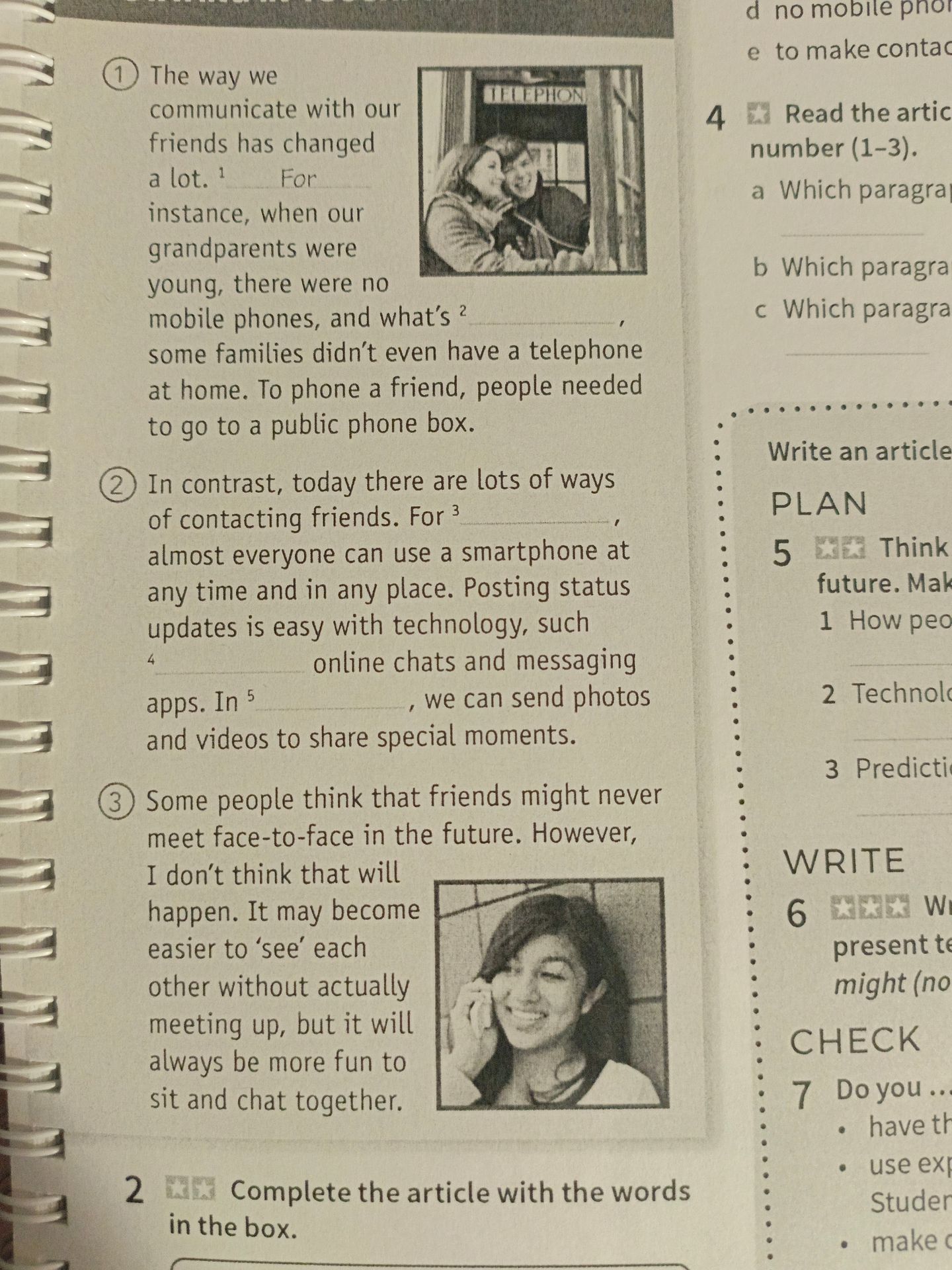
- 1. The way we communicate with our friends has changed a lot. For instance, when our grandparents were young, there were no mobile phones, and what's more, some families didn't even have a telephone at home. To phone a friend, people needed to go to a public phone box.
- 2. In contrast, today there are lots of ways of contacting friends. For example, almost everyone can use a smartphone at any time and in any place. Posting status updates is easy with technology, such as online chats and messaging apps. In addition, we can send photos and videos to share special moments.
- 3. Some people think that friends might never meet face-to-face in the future. However, I don't think that will happen. It may become easier to 'see' each other without actually meeting up, but it will always be more fun to sit and chat together.
- 4. Read the article and match the people (1–3) with their opinions (a–e).
- 5. Think about the future. Make a plan for an article.
- 7. Check your work.
- 2. Complete the article with the words in the box.
