
 Алгебра
 Английский
 Биология
 География
 Геометрия
 История
 Русский
 Обществознание
 Физика
 Химия
 Информатика
 Литература
 Математика
Ответ:
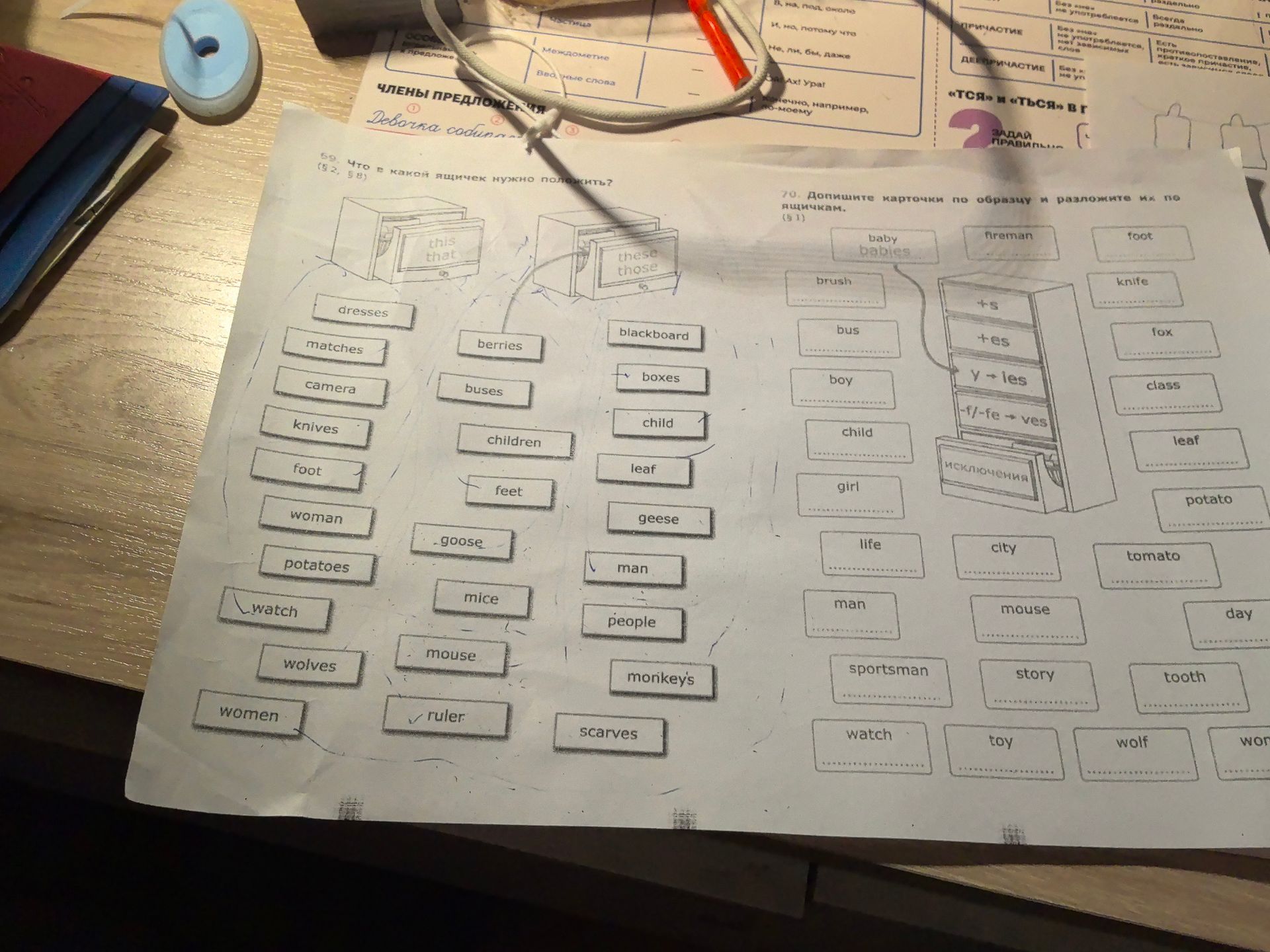
Перевод задания: Допишите карточки по образцу и разложите их по ящикам.
Plural spelling rules: add -s to most nouns; add -es after s, sh, ch, x; change consonant + y to -ies; for many nouns ending in -f/-fe, change to -ves. Some plurals are irregular or have other spelling changes.
+s: fireman — firemen (пожарный — пожарные; irregular), girl — girls (девочка — девочки), day — days (день — дни), toy — toys (игрушка — игрушки), sportsman — sportsmen (спортсмен — спортсмены; irregular).
+es: brush — brushes (щётка — щётки), bus — buses (автобус — автобусы), fox — foxes (лиса — лисы), class — classes (класс — классы), watch — watches (часы — часы), potato — potatoes (картофелина — картофелины), tomato — tomatoes (помидор — помидоры).
y → ies: baby — babies (младенец — младенцы), city — cities (город — города), story — stories (рассказ — рассказы).
-f/-fe → -ves: knife — knives (нож — ножи), leaf — leaves (лист — листья), life — lives (жизнь — жизни), wolf — wolves (волк — волки).
Irregular forms: foot — feet (ступня — ступни), child — children (ребёнок — дети), man — men (мужчина — мужчины), mouse — mice (мышь — мыши), tooth — teeth (зуб — зубы), woman — women (женщина — женщины).
“Fireman” and “sportsman” form their plurals as “firemen” and “sportsmen”; they are irregular forms, not regular +s forms. The example “baby — babies” follows the y → ies rule.
