
 Алгебра
 Английский
 Биология
 География
 Геометрия
 История
 Русский
 Обществознание
 Физика
 Химия
 Информатика
 Литература
 Математика
Ответ:
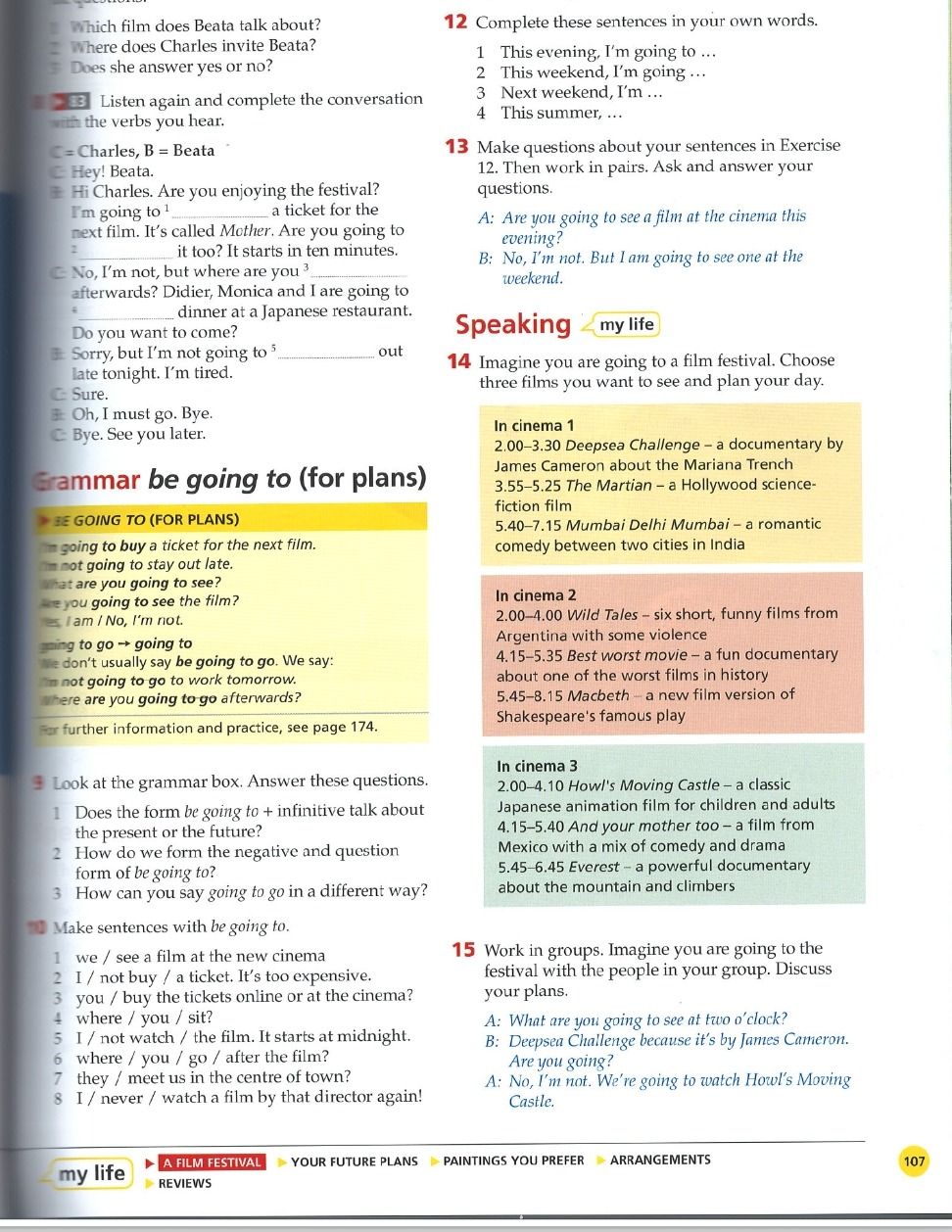
Перевод задания: Посмотрите на грамматическую таблицу. Ответьте на вопросы.
English: It talks about the future, especially plans and intentions. (Эта конструкция говорит о будущем, особенно о планах и намерениях.)
English: For the negative, add not after the correct form of be: am not/is not/are not going to. To make a question, put the correct form of be before the subject: Are you going to…? (В отрицании поставьте not после нужной формы be: am not/is not/are not going to. В вопросе поставьте нужную форму be перед подлежащим: Are you going to…?)
English: In informal speech, going to is often pronounced gonna. In standard writing, use going to. (В разговорной речи going to часто произносится как gonna. В стандартной письменной речи пишут going to.)
