
 Алгебра
 Английский
 Биология
 География
 Геометрия
 История
 Русский
 Обществознание
 Физика
 Химия
 Информатика
 Литература
 Математика
Ответ:
📍Тапни предложение — включится подсветка для легкого переноса текста в тетрадь.
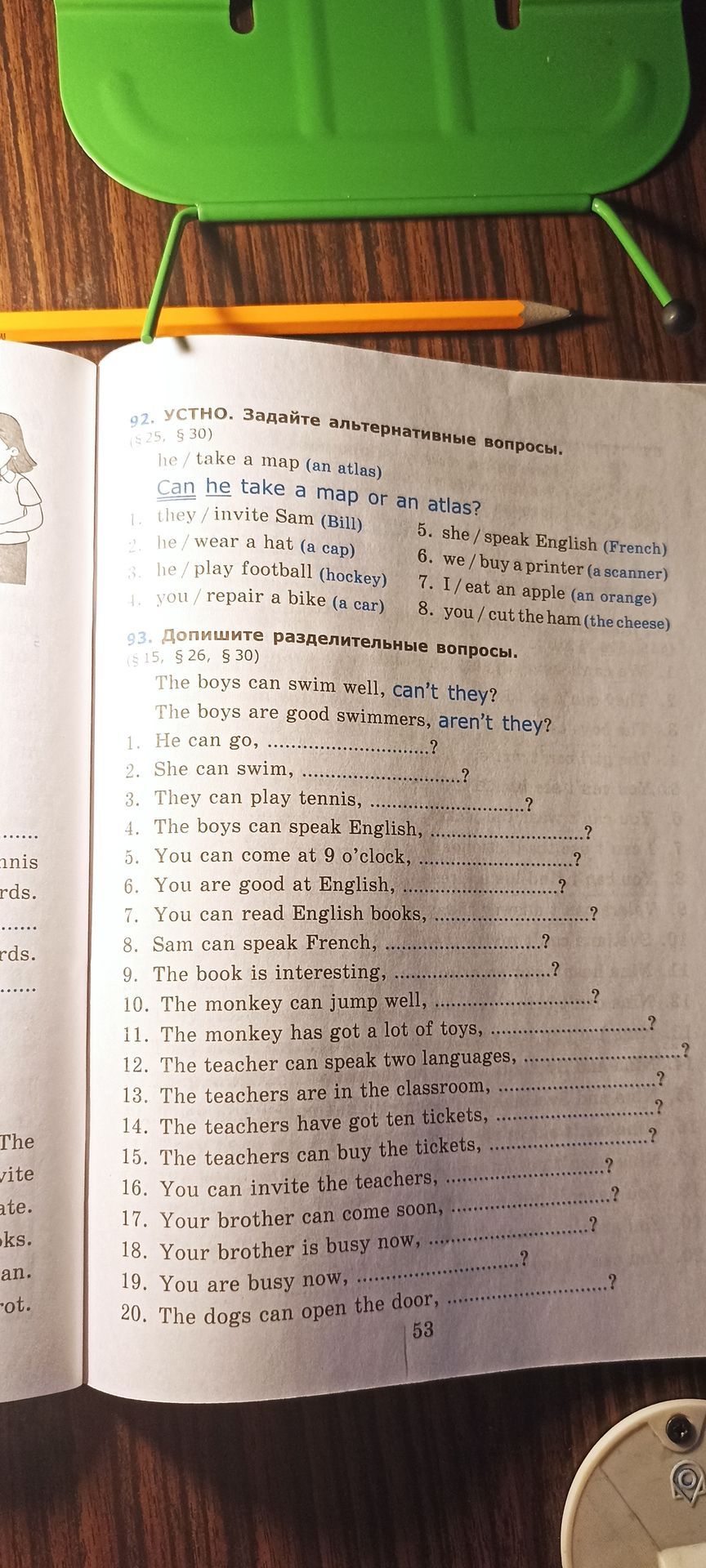
Перевод задания: Допишите разделительные вопросы.
Правило: после утвердительного предложения ставится отрицательная краткая форма вспомогательного или модального глагола; местоимение соответствует подлежащему.
- He can go, can’t he?
- She can swim, can’t she?
- They can play tennis, can’t they?
- The boys can speak English, can’t they?
- You can come at 9 o’clock, can’t you?
- You are good at English, aren’t you?
- You can read English books, can’t you?
- Sam can speak French, can’t he?
- The book is interesting, isn’t it?
- The monkey can jump well, can’t it?
- The monkey has got a lot of toys, hasn’t it?
- The teacher can speak two languages, can’t he?
- The teachers are in the classroom, aren’t they?
- The teachers have got ten tickets, haven’t they?
- The teachers can buy the tickets, can’t they?
- You can invite the teachers, can’t you?
- Your brother can come soon, can’t he?
- Your brother is busy now, isn’t he?
- You are busy now, aren’t you?
- The dogs can open the door, can’t they?
Перевод выполненных ответов: Во всех предложениях добавлены разделительные вопросы со значением «не так ли?».
