
 Алгебра
 Английский
 Биология
 География
 Геометрия
 История
 Русский
 Обществознание
 Физика
 Химия
 Информатика
 Литература
 Математика
Ответ:
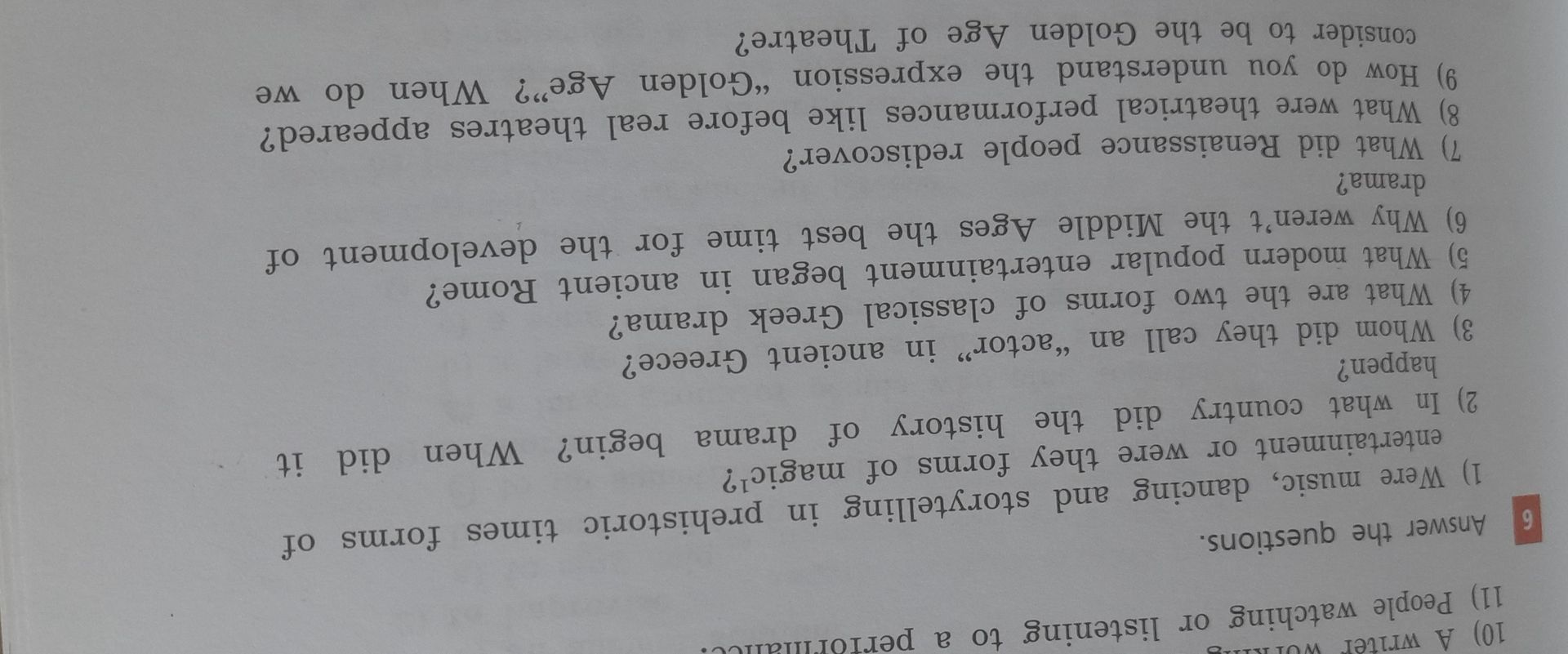
Перевод задания: Ответьте на вопросы.
Were music, dancing and storytelling in prehistoric times forms of entertainment, or were they forms of magic?
Music, dancing and storytelling were probably both forms of entertainment and forms of magic. People used them to entertain themselves and to perform religious rituals.
Музыка, танцы и рассказывание историй, вероятно, были и развлечением, и магией. Люди использовали их для развлечения и проведения религиозных обрядов.In what country did the history of drama begin? When did it happen?
The history of drama began in ancient Greece in the sixth century BC, during religious festivals in honour of the god Dionysus.
История драмы началась в Древней Греции в VI веке до нашей эры во время религиозных праздников в честь бога Диониса.Whom did they call an “actor” in ancient Greece?
In ancient Greece, an “actor” was a person who answered the chorus or spoke with it. The first actor was traditionally considered to be Thespis.
В Древней Греции «актёром» называли человека, который отвечал хору или разговаривал с ним. Традиционно первым актёром считался Феспис.What are the two forms of classical Greek drama?
The two forms of classical Greek drama are tragedy and comedy.
Две формы классической греческой драмы — трагедия и комедия.What modern popular entertainment began in ancient Rome?
Gladiatorial games began in ancient Rome. They can be regarded as an early form of popular entertainment.
В Древнем Риме начались гладиаторские игры. Их можно считать ранней формой популярного развлечения.Why weren’t the Middle Ages the best time for the development of drama?
The Middle Ages were not the best time for the development of drama because the Church often disapproved of theatrical performances and considered them sinful. However, religious plays were later performed in churches and town squares.
Средние века не были лучшим временем для развития драмы, потому что церковь часто не одобряла театральные представления и считала их греховными. Однако позднее религиозные пьесы стали ставить в церквях и на городских площадях.What did Renaissance people rediscover?
Renaissance people rediscovered the culture and drama of ancient Greece and Rome.
Люди эпохи Возрождения вновь открыли для себя культуру и драму Древней Греции и Рима.What were theatrical performances like before real theatres appeared?
Before real theatres appeared, theatrical performances were usually held in churches, marketplaces, courtyards and temporary open-air stages. Actors performed on simple platforms and travelled from place to place.
До появления настоящих театров театральные представления обычно проходили в церквях, на рыночных площадях, во дворах и на временных открытых сценах. Актёры выступали на простых помостах и переезжали с места на место.How do you understand the expression “Golden Age”? When do we consider it to be the Golden Age of Theatre?
The expression “Golden Age” means a period when something develops especially successfully and produces many important works. The Golden Age of Theatre is usually associated with Elizabethan England, especially the late sixteenth and early seventeenth centuries, when William Shakespeare and other great dramatists wrote their plays.
Выражение «золотой век» означает период, когда что-либо особенно успешно развивается и появляется много выдающихся произведений. Золотым веком театра обычно называют елизаветинскую Англию, особенно конец XVI и начало XVII века, когда Уильям Шекспир и другие великие драматурги писали свои пьесы.
