
 Алгебра
 Английский
 Биология
 География
 Геометрия
 История
 Русский
 Обществознание
 Физика
 Химия
Химия Информатика
 Литература
 Математика
Вопрос:
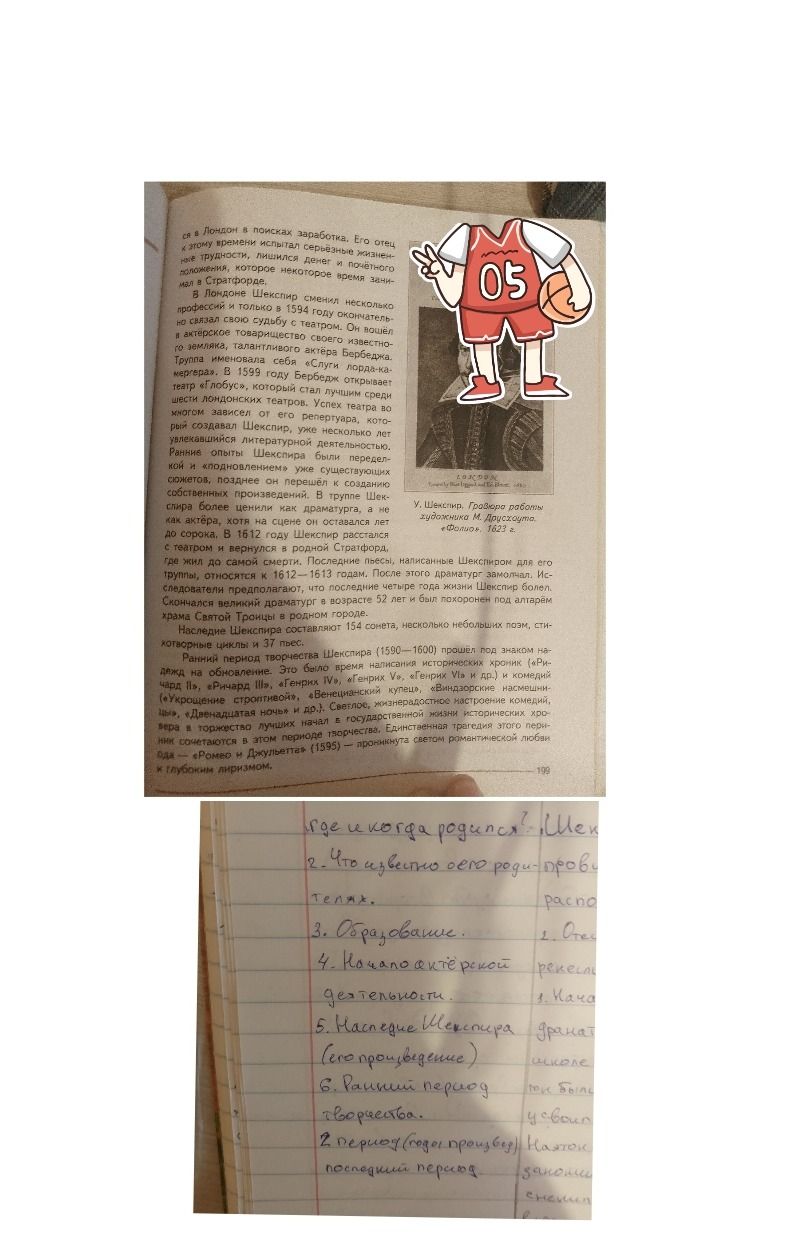
Based on the text provided, can you identify the key aspects of William Shakespeare's life and work that are presented?
Ответ:
Key aspects of William Shakespeare's life and work presented:
- Early Life in London: He moved to London seeking employment and faced financial difficulties. His father had lost his position.
- Theater Career: Shakespeare changed professions several times before joining an acting company in 1594. He became part of the 'Lord Chamberlain's Men' (later 'King's Men') and was associated with the "Globe" theatre.
- Writing Evolution: Initially, he adapted existing plots but later moved to creating original works. He was more valued as a playwright than an actor.
- Retirement and Death: He left the theater around 1612 and returned to Stratford-upon-Avon, where he lived until his death. The last plays were written between 1612-1613. He died at the age of 52 and was buried in his hometown church.
- Legacy: His work includes 154 sonnets, several poems, poetic cycles, and 37 plays.
- Periods of Work: His early period (1590-1600) focused on historical chronicles and comedies, characterized by optimism. The period also produced his tragedy "Romeo and Juliet" (1595), noted for its romantic love and lyricism.
Summary: The text outlines Shakespeare's move to London, his involvement in theatre as both an actor and a playwright, the evolution of his writing, his return to Stratford, and the thematic focus of his early dramatic period, particularly highlighting his comedies, historical plays, and the tragedy "Romeo and Juliet."
