
 Алгебра
 Английский
 Биология
 География
 Геометрия
 История
 Русский
 Обществознание
 Физика
 Химия
Химия Информатика
 Литература
 Математика
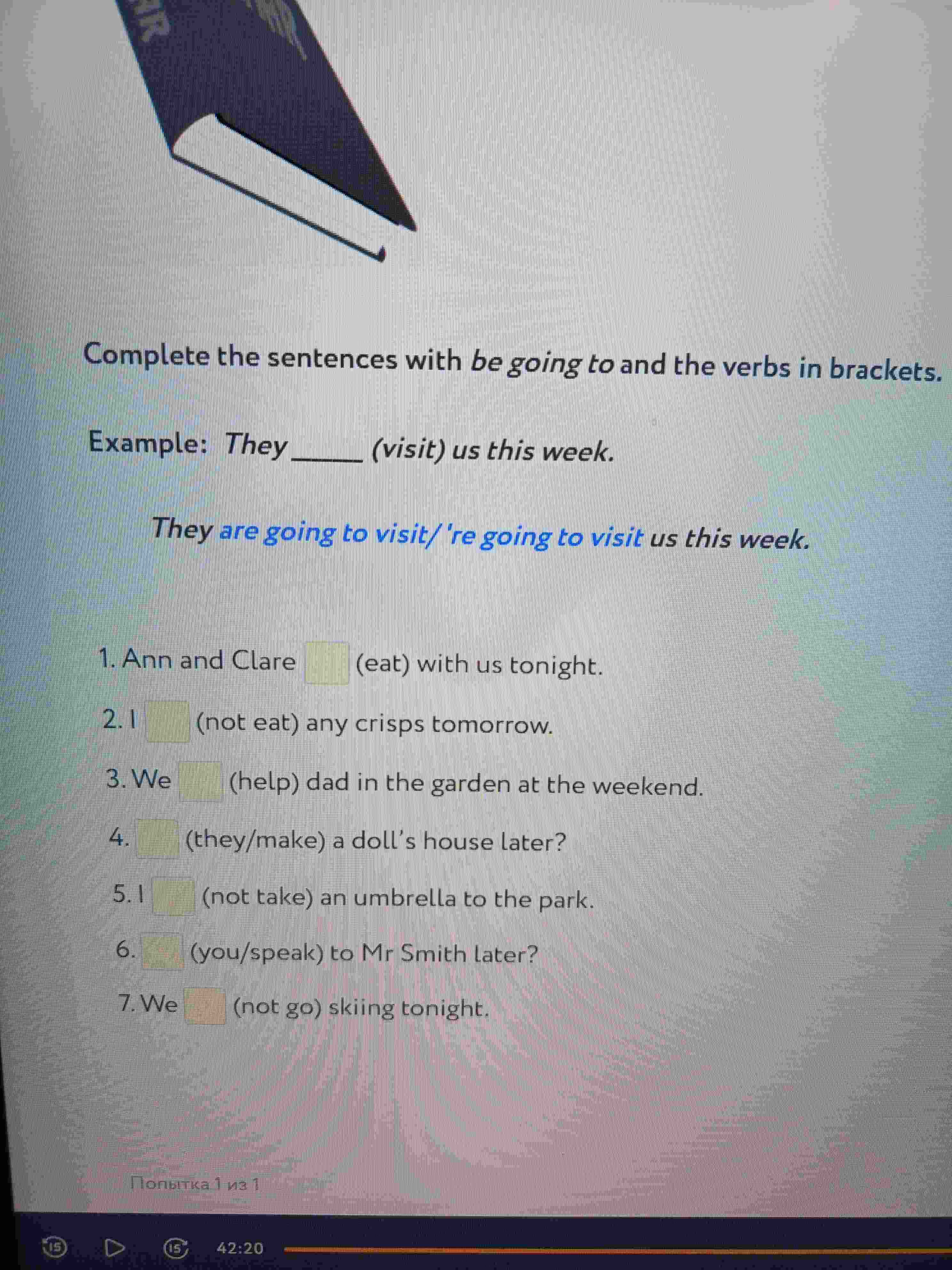
Вопрос:
Complete the sentences with be going to and the verbs in brackets.
Ответ:
Okay, let's complete the sentences using 'be going to' and the verbs in brackets. Remember that 'be going to' expresses future plans or intentions. Here are the completed sentences:
1. Ann and Clare **are going to eat** with us tonight.
*Explanation:* Ann and Clare is a plural subject, so we use "are". 'Going to' is followed by the base form of the verb 'eat'.
2. I **am not going to eat** any crisps tomorrow.
*Explanation:* The subject is 'I', so we use "am". To make it negative, we add "not" after "am". 'Going to' is followed by the base form of the verb 'eat'.
3. We **are going to help** dad in the garden at the weekend.
*Explanation:* We is a plural subject, so we use "are". 'Going to' is followed by the base form of the verb 'help'.
4. **Are they going to make** a doll's house later?
*Explanation:* This is a question with a plural subject 'they', so we start with "Are". 'Going to' is followed by the base form of the verb 'make'.
5. I **am not going to take** an umbrella to the park.
*Explanation:* The subject is 'I', so we use "am". To make it negative, we add "not" after "am". 'Going to' is followed by the base form of the verb 'take'.
6. **Are you going to speak** to Mr. Smith later?
*Explanation:* This is a question with the subject 'you', so we start with "Are". 'Going to' is followed by the base form of the verb 'speak'.
7. We **are not going to go** skiing tonight.
*Explanation:* We is a plural subject, so we use "are". To make it negative, we add "not" after "are". 'Going to' is followed by the base form of the verb 'go'.
**In summary:**
1. Ann and Clare are going to eat with us tonight.
2. I am not going to eat any crisps tomorrow.
3. We are going to help dad in the garden at the weekend.
4. Are they going to make a doll's house later?
5. I am not going to take an umbrella to the park.
6. Are you going to speak to Mr Smith later?
7. We are not going to go skiing tonight.
Let me know if you have any other questions! Good luck with your English studies!
1. Ann and Clare **are going to eat** with us tonight.
*Explanation:* Ann and Clare is a plural subject, so we use "are". 'Going to' is followed by the base form of the verb 'eat'.
2. I **am not going to eat** any crisps tomorrow.
*Explanation:* The subject is 'I', so we use "am". To make it negative, we add "not" after "am". 'Going to' is followed by the base form of the verb 'eat'.
3. We **are going to help** dad in the garden at the weekend.
*Explanation:* We is a plural subject, so we use "are". 'Going to' is followed by the base form of the verb 'help'.
4. **Are they going to make** a doll's house later?
*Explanation:* This is a question with a plural subject 'they', so we start with "Are". 'Going to' is followed by the base form of the verb 'make'.
5. I **am not going to take** an umbrella to the park.
*Explanation:* The subject is 'I', so we use "am". To make it negative, we add "not" after "am". 'Going to' is followed by the base form of the verb 'take'.
6. **Are you going to speak** to Mr. Smith later?
*Explanation:* This is a question with the subject 'you', so we start with "Are". 'Going to' is followed by the base form of the verb 'speak'.
7. We **are not going to go** skiing tonight.
*Explanation:* We is a plural subject, so we use "are". To make it negative, we add "not" after "are". 'Going to' is followed by the base form of the verb 'go'.
**In summary:**
1. Ann and Clare are going to eat with us tonight.
2. I am not going to eat any crisps tomorrow.
3. We are going to help dad in the garden at the weekend.
4. Are they going to make a doll's house later?
5. I am not going to take an umbrella to the park.
6. Are you going to speak to Mr Smith later?
7. We are not going to go skiing tonight.
Let me know if you have any other questions! Good luck with your English studies!
