
 Алгебра
 Английский
 Биология
 География
 Геометрия
 История
 Русский
 Обществознание
 Физика
 Химия
Химия Информатика
 Литература
 Математика
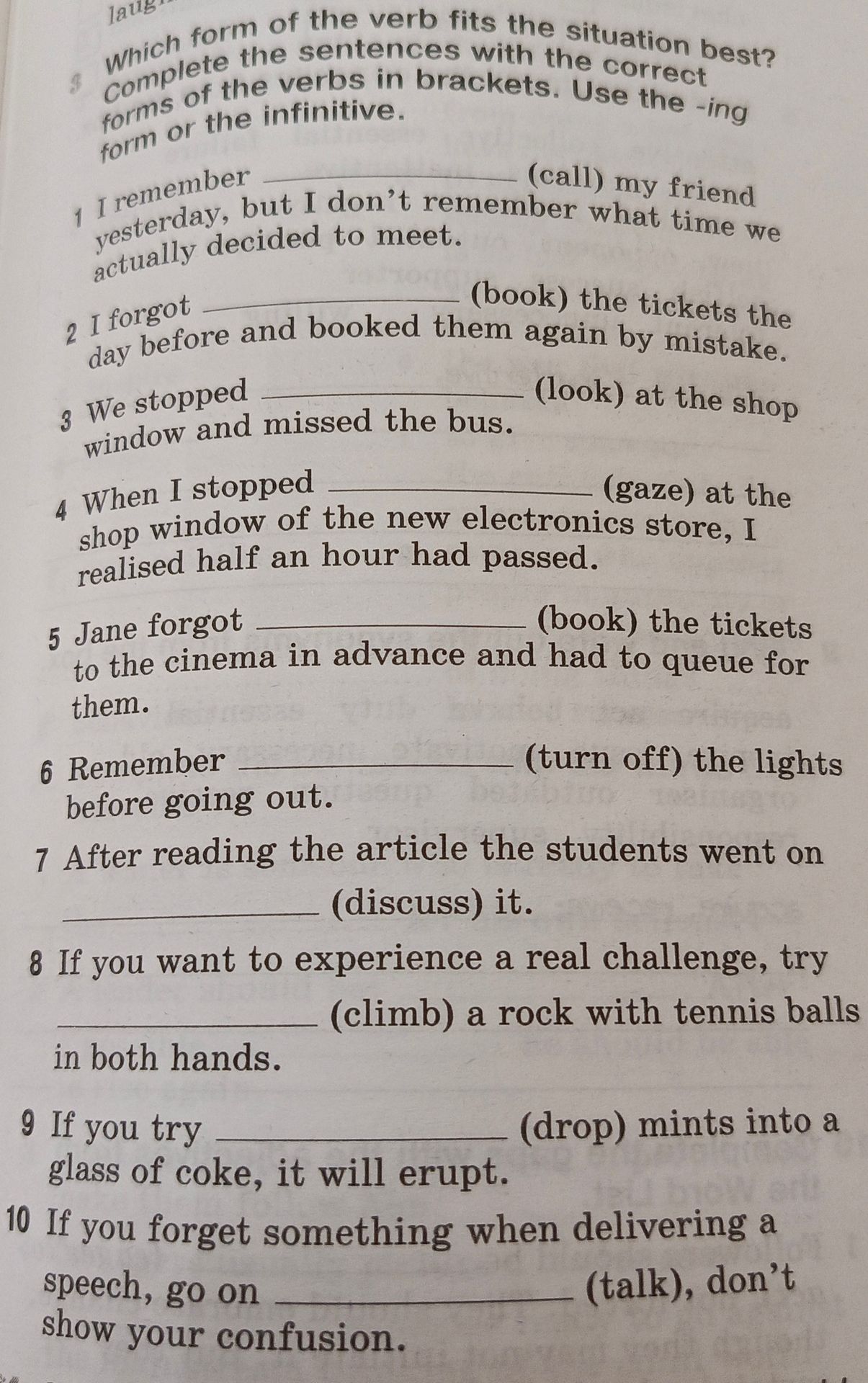
Complete the sentences with the correct forms of the verbs in brackets. Use the -ing form or the infinitive.
Ответ:
1. I remember calling my friend yesterday, but I don't remember what time we actually decided to meet.
Remember can be followed by a gerund (-ing) or an infinitive. When followed by a gerund, it refers to a past action that is recalled. When followed by an infinitive, it refers to a future action that one should not forget.
2. I forgot to book the tickets the day before and booked them again by mistake.
Forget can be followed by a gerund (-ing) or an infinitive. When followed by a gerund, it means to recall something from the past, but in this case, the action was not done. When followed by an infinitive, it means to fail to do something.
3. We stopped looking at the shop window and missed the bus.
Stop can be followed by a gerund (-ing) or an infinitive. When followed by a gerund, it means to cease an action. When followed by an infinitive, it means to stop doing something in order to do something else.
4. When I stopped to gaze at the shop window of the new electronics store, I realised half an hour had passed.
Stop can be followed by a gerund (-ing) or an infinitive. When followed by a gerund, it means to cease an action. When followed by an infinitive, it means to stop doing something in order to do something else.
5. Jane forgot to book the tickets to the cinema in advance and had to queue for them.
Forget can be followed by a gerund (-ing) or an infinitive. When followed by a gerund, it means to recall something from the past, but in this case, the action was not done. When followed by an infinitive, it means to fail to do something.
6. Remember to turn off the lights before going out.
Remember can be followed by a gerund (-ing) or an infinitive. When followed by a gerund, it refers to a past action that is recalled. When followed by an infinitive, it refers to a future action that one should not forget.
7. After reading the article the students went on to discuss it.
Go on can be followed by a gerund (-ing) or an infinitive. When followed by a gerund, it means to continue an action. When followed by an infinitive, it means to do something after doing something else.
8. If you want to experience a real challenge, try climbing a rock with tennis balls in both hands.
Try can be followed by a gerund (-ing) or an infinitive. When followed by a gerund, it suggests experimenting with an action. When followed by an infinitive, it means to make an effort to do something.
9. If you try to drop mints into a glass of coke, it will erupt.
Try can be followed by a gerund (-ing) or an infinitive. When followed by a gerund, it suggests experimenting with an action. When followed by an infinitive, it means to make an effort to do something.
10. If you forget something when delivering a speech, go on talking, don't show your confusion.
Go on can be followed by a gerund (-ing) or an infinitive. When followed by a gerund, it means to continue an action. When followed by an infinitive, it means to do something after doing something else.
