
 Алгебра
 Английский
 Биология
 География
 Геометрия
 История
 Русский
 Обществознание
 Физика
 Химия
Химия Информатика
 Литература
 Математика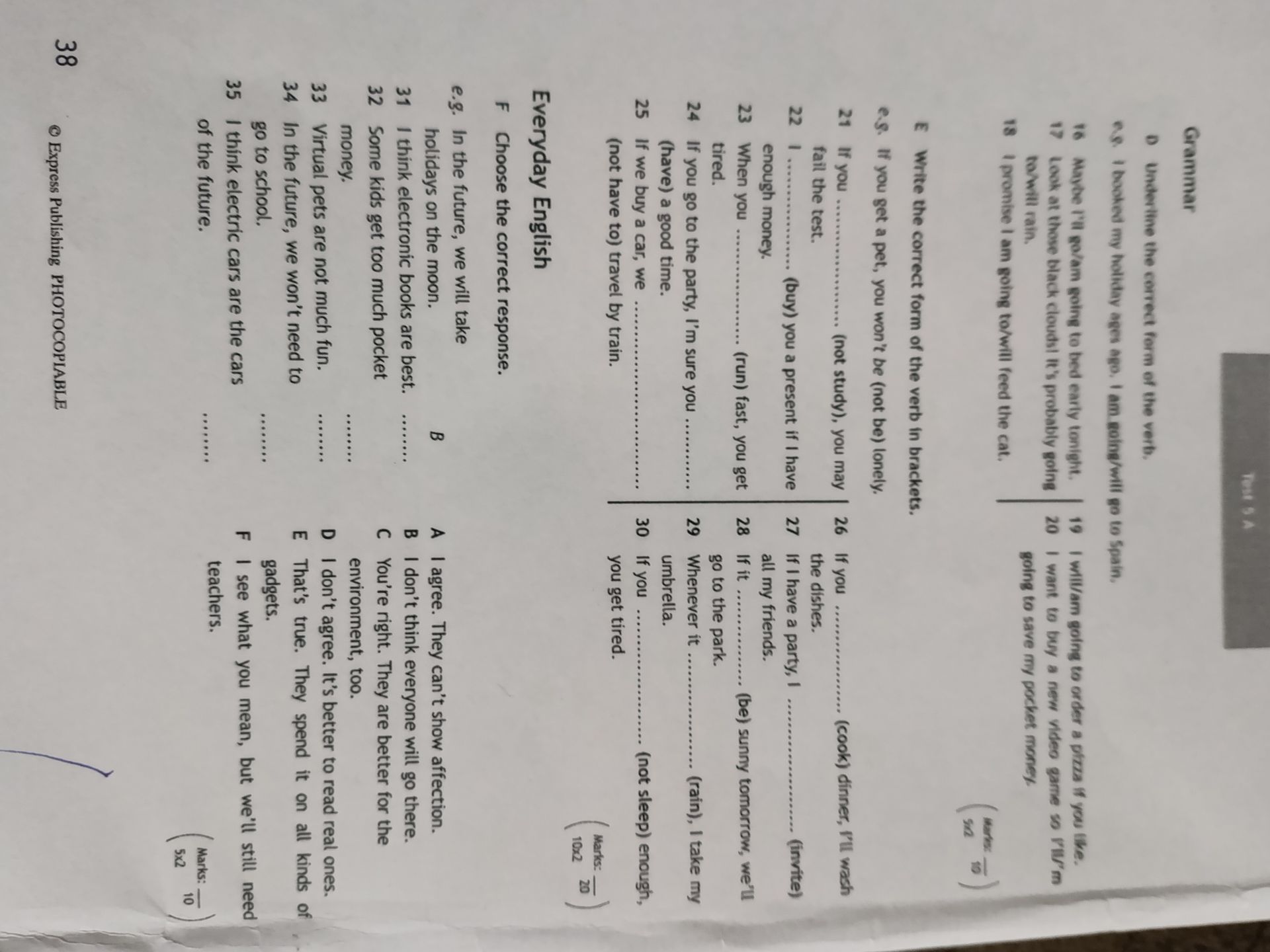
Ответ:
21. If you don't study, you may fail the test.
This is a first conditional sentence. We use the present simple in the 'if' clause and 'will' or modal verbs like 'may' in the main clause.
22. I will buy you a present if I have enough money.
This is a first conditional sentence. We use the present simple in the 'if' clause and 'will' in the main clause.
23. When you are tired.
This is a time clause using 'when'. We use the present simple for future events.
24. If you go to the party, I'm sure you will have a good time.
This is a first conditional sentence. We use the present simple in the 'if' clause and 'will' in the main clause.
25. If we buy a car, we will not have to travel by train.
This is a first conditional sentence. We use the present simple in the 'if' clause and 'will not have to' in the main clause.
26. If you cook dinner, I'll wash the dishes.
This is a first conditional sentence. We use the present simple in the 'if' clause and 'will' in the main clause.
27. If I have a party, I will invite all my friends.
This is a first conditional sentence. We use the present simple in the 'if' clause and 'will' in the main clause.
28. If it is sunny tomorrow, we'll go to the park.
This is a first conditional sentence. We use the present simple in the 'if' clause and 'will' in the main clause.
29. Whenever it rains, I take my umbrella.
This sentence describes a habitual action in the future. We use the present simple in the 'whenever' clause and the present simple in the main clause.
30. If you do not sleep enough, you get tired.
This sentence describes a general truth or a condition that always leads to the same result. We use the present simple in both clauses.
