
 Алгебра
 Английский
 Биология
 География
 Геометрия
 История
 Русский
 Обществознание
 Физика
 Химия
Химия Информатика
 Литература
 Математика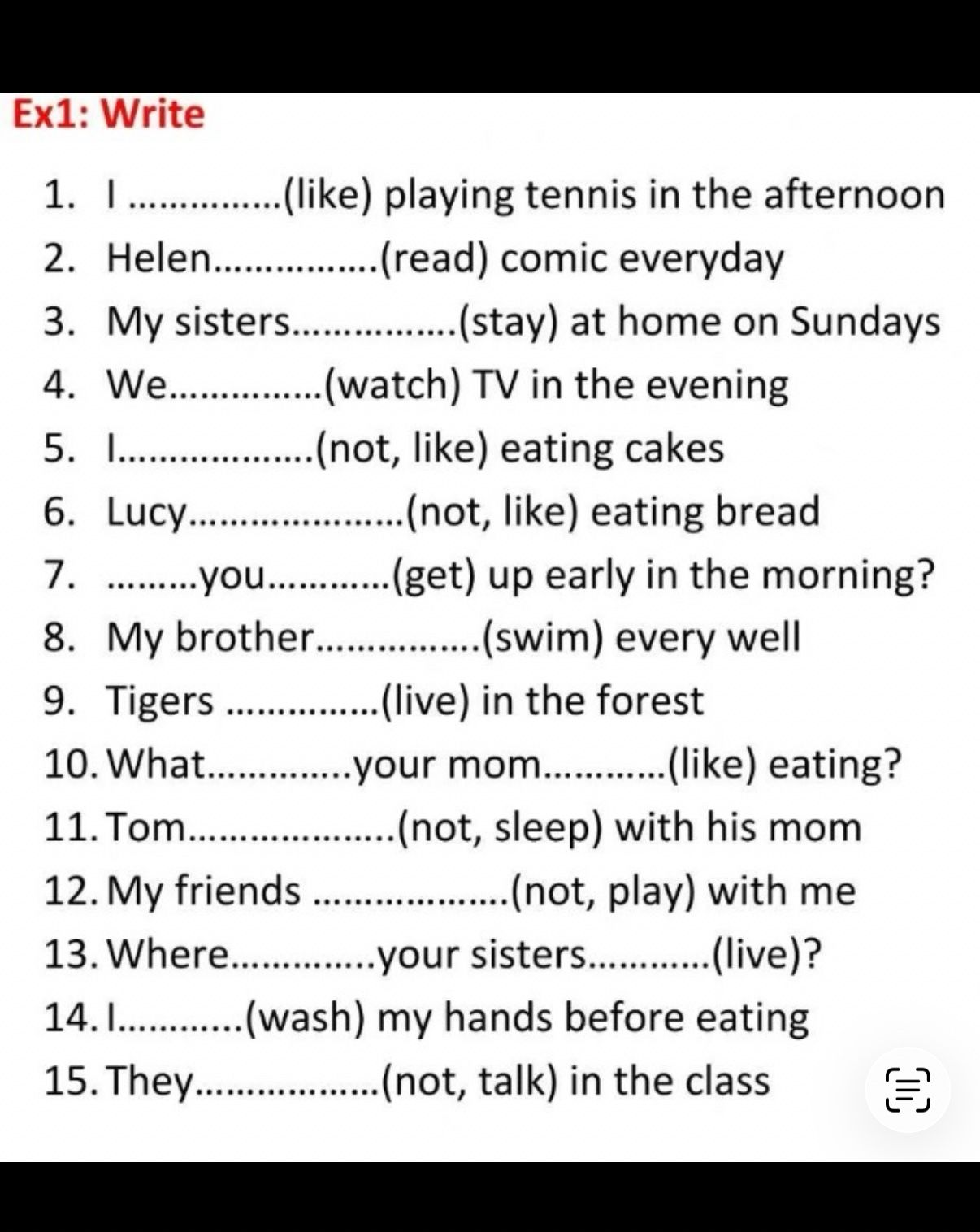
Ответ:
Перевод задания: Напишите глаголы в правильной форме настоящего простого времени (Present Simple).
- I like playing tennis in the afternoon. (Мне нравится играть в теннис во второй половине дня.)
- Helen reads comics every day. (Хелен каждый день читает комиксы.)
- My sisters stay at home on Sundays. (Мои сёстры остаются дома по воскресеньям.)
- We watch TV in the evening. (Мы смотрим телевизор вечером.)
- I do not like eating cakes. (Я не люблю есть пирожные.)
- Lucy does not like eating bread. (Люси не любит есть хлеб.)
- Do you get up early in the morning? (Ты встаёшь рано утром?)
- My brother swims very well. (Мой брат очень хорошо плавает.)
- Tigers live in the forest. (Тигры живут в лесу.)
- What does your mom like eating? (Что любит есть твоя мама?)
- Tom does not sleep with his mom. (Том не спит со своей мамой.)
- My friends do not play with me. (Мои друзья не играют со мной.)
- Where do your sisters live? (Где живут твои сёстры?)
- I wash my hands before eating. (Я мою руки перед едой.)
- They do not talk in class. (Они не разговаривают на уроке.)
Правило: в утвердительных предложениях с he, she, it к глаголу обычно добавляется окончание -s или -es. В вопросах и отрицаниях используются do/does, а основной глагол ставится без окончания.
