
 Алгебра
 Английский
 Биология
 География
 Геометрия
 История
 Русский
 Обществознание
 Физика
 Химия
Химия Информатика
 Литература
 Математика
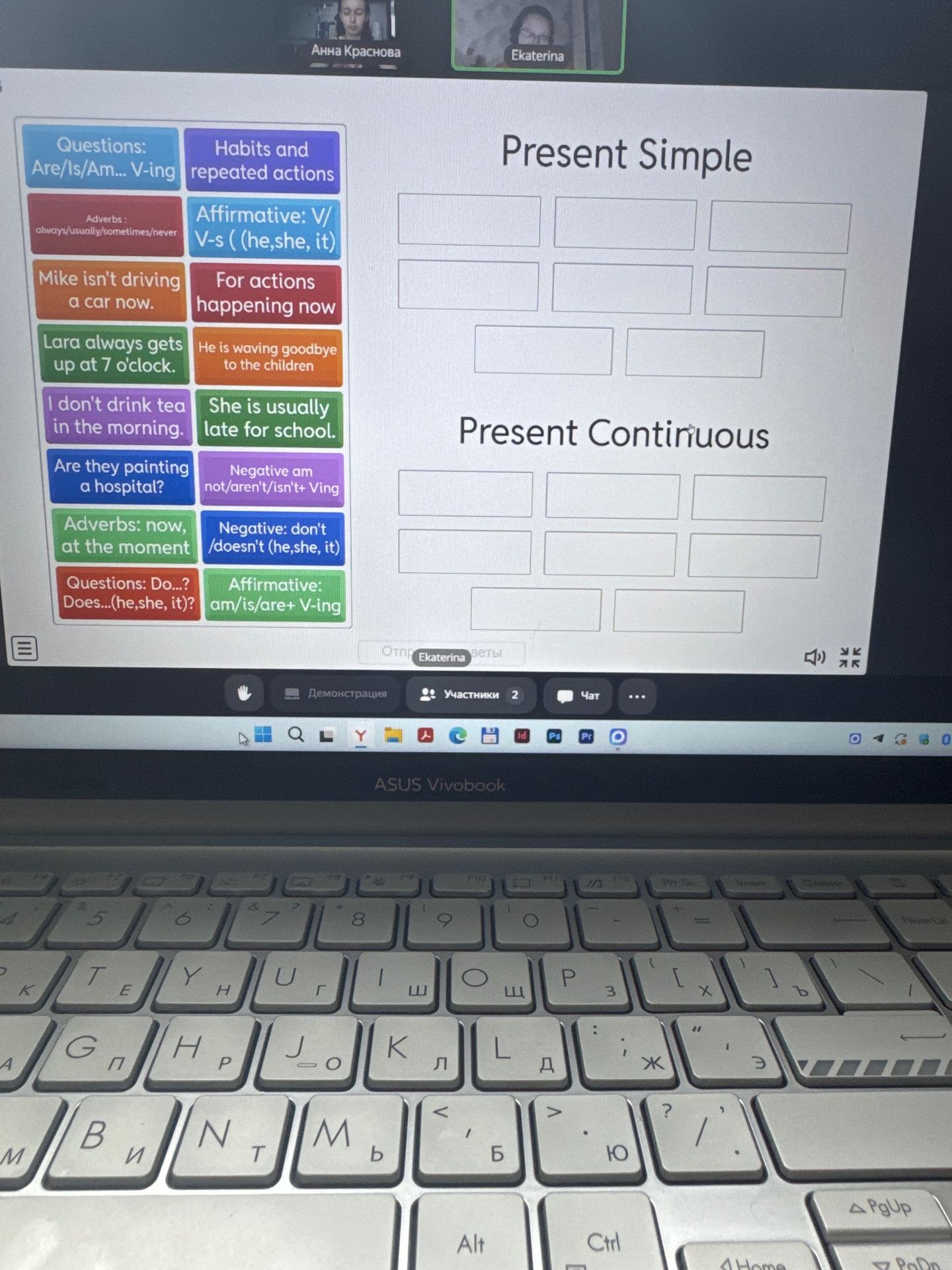
Fill in the blanks with the correct form of the verb and appropriate tense. Present Simple: 1. Mike ______ (drive) a car now. 2. Lara always ______ (get) up at 7 o'clock. 3. I ______ (drink) tea in the morning. 4. Are they ______ (paint) a hospital? Present Continuous: 1. He is ______ (wave) goodbye to the children. 2. She is usually ______ (late) for school. 3. ______ you ______ (paint) a hospital? 4. Mike isn't ______ (drive) a car now. Rules: Questions: Are/Is/Am... V-ing, Questions: Do...? Does...(he, she, it)? Adverbs: always/usually/sometimes/never, Adverbs: now, at the moment Habits and repeated actions, For actions happening now Affirmative: V/ V-s ((he, she, it), Affirmative: am/is/are+ V-ing Negative am not/aren't/isn't+ Ving, Negative: don't /doesn't (he, she, it)
Ответ:
Present Simple
1. Mike drives a car now. (Incorrect placement of 'now' for Present Simple, this would be better in Present Continuous. However, following the structure provided, it's likely intended as a statement about his general ability or profession rather than a current action.)
2. Lara always gets up at 7 o'clock. (Habit/repeated action)
3. I don't drink tea in the morning. (Negative form for a habit/routine)
4. Do they paint a hospital? (Question form for a current action/state, though 'Are they painting...' is more common for this context).
Present Continuous
1. He is waving goodbye to the children. (Action happening now)
2. She is usually late for school. (This is a statement of fact/habit, typically Present Simple. 'She is usually being late' is grammatically awkward and not standard. If the intention was a temporary situation, 'She is being late today' might be used, but 'usually' points to Present Simple.)
3. Are you painting a hospital? (Question form for an action happening now)
4. Mike isn't driving a car now. (Negative form for an action happening now)
Rules Recap:
Present Simple: Used for habits, routines, general truths, facts. Typically uses base form of the verb (V) or V-s for he/she/it. Questions often use Do/Does. Negatives use don't/doesn't.
Present Continuous: Used for actions happening now, at the moment of speaking, or temporary situations. Uses 'am/is/are' + V-ing. Questions invert the subject and verb. Negatives use 'am not/isn't/aren't' + V-ing.
Adverbs: 'always/usually/sometimes/never' often signal Present Simple. 'now/at the moment' often signal Present Continuous.
