
 Алгебра
 Английский
 Биология
 География
 Геометрия
 История
 Русский
 Обществознание
 Физика
 Химия
Химия Информатика
 Литература
 Математика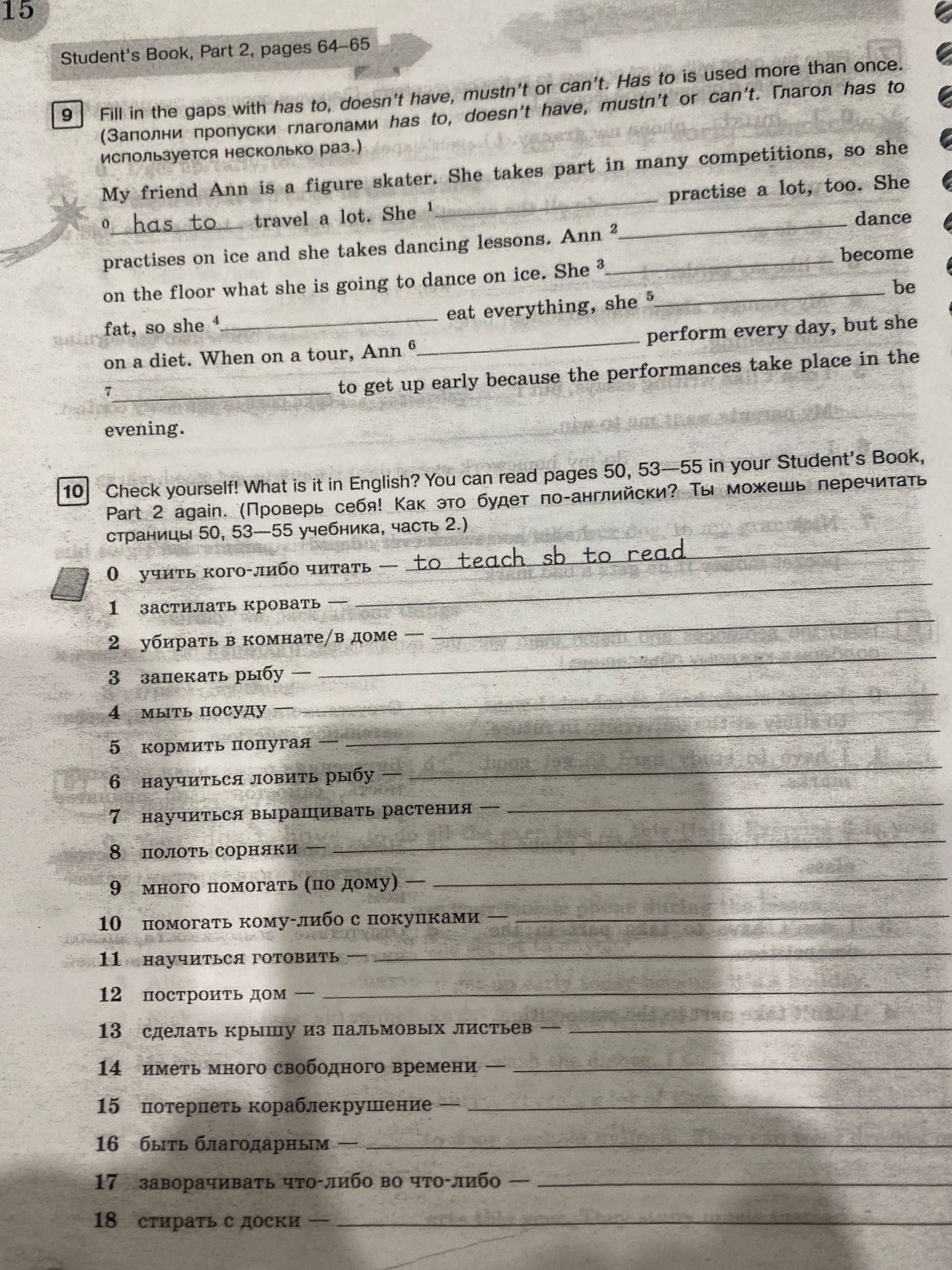
Ответ:
Решение:
Заполним пропуски подходящими модальными глаголами, исходя из контекста:
- My friend Ann is a figure skater. She takes part in many competitions, so she has to practise a lot, too. (Она участвует во многих соревнованиях, поэтому ей приходится много тренироваться.)
- She has to travel a lot. (Ей приходится много путешествовать.)
- She has to dance practises on ice and she takes dancing lessons. (Ей приходится танцевать на льду и брать уроки танцев.)
- Ann has to on the floor what she is going to dance on ice. (Анне нужно на полу [уточнять], что она собирается танцевать на льду. Фраза немного странная, но 'has to' подходит по смыслу необходимости.)
- She can't eat everything, she has to be fat, so she has to perform every day, but she has to to get up early because the performances take place in the evening. (В этом предложении чувствуется ошибка в исходном тексте или в переводе. Логично было бы, чтобы она can't есть всё, но предложение продолжается так, будто она has to быть толстой, что противоречит реальности для фигуристки. Тем не менее, следуя структуре, здесь возможны варианты, но 'has to' для необходимости и 'can't' для запрета/невозможности подходят лучше всего.)
- Let's try to rephrase the sentence for clarity and logical flow: My friend Ann is a figure skater. She takes part in many competitions, so she has to practise a lot, too. She has to travel a lot. She has to dance practises on ice and she takes dancing lessons. Ann has to decide what she is going to dance on ice. She can't eat everything, she has to be fit, not fat, so she has to perform every day, but she has to get up early because the performances take place in the evening. (Предполагая, что фраза 'be fat' — ошибка и должно быть 'be fit').
Ответ: has to; has to; has to; has to; can't; has to; has to; has to.
