
 Алгебра
 Английский
 Биология
 География
 Геометрия
 История
 Русский
 Обществознание
 Физика
 Химия
Химия Информатика
 Литература
 Математика
Вопрос:
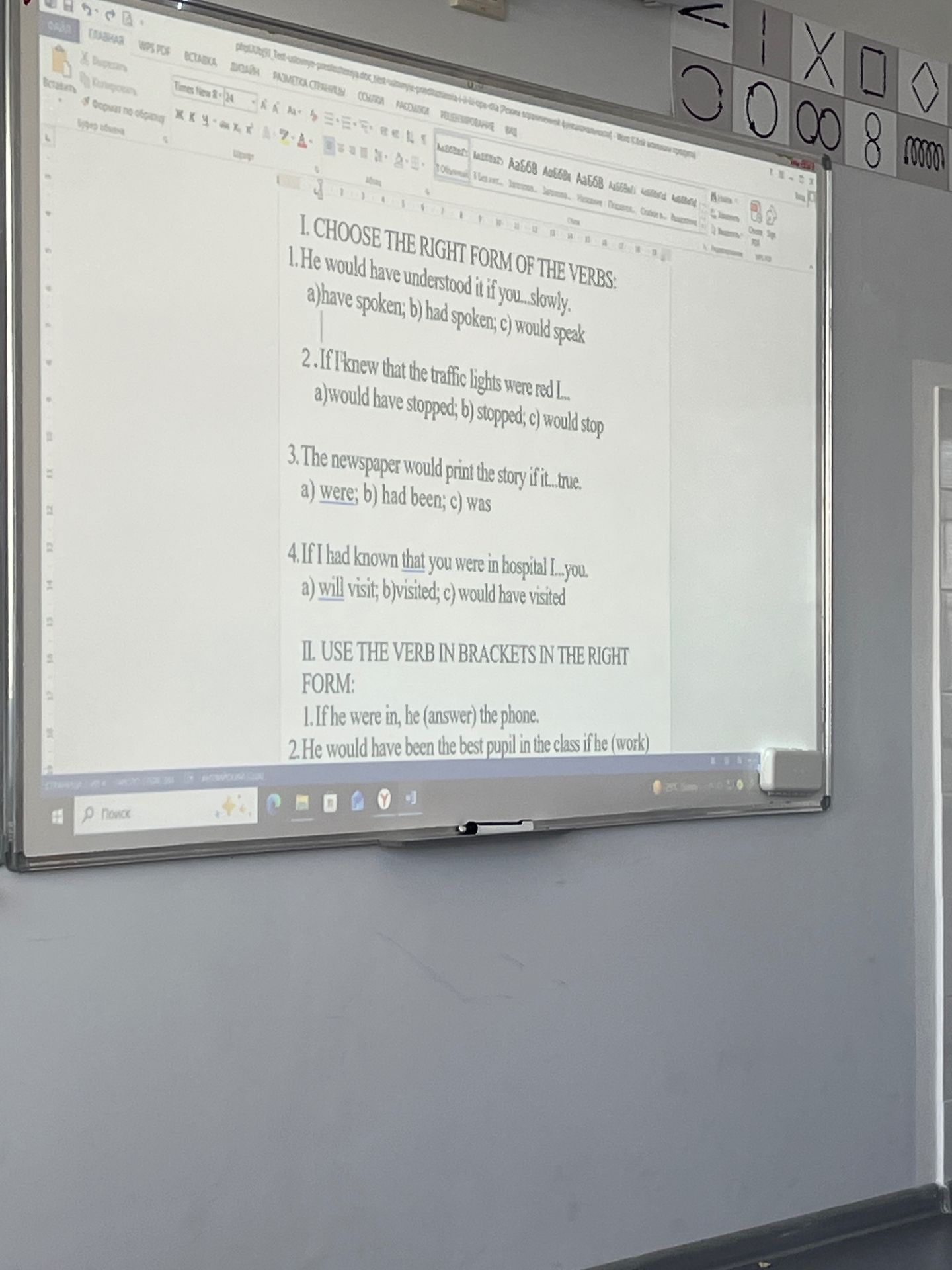
I. CHOOSE THE RIGHT FORM OF THE VERBS: 1. He would have understood it if you...slowly. a)have spoken; b) had spoken; c) would speak 2. If Iknew that the traffic lights were red I... a) would have stopped; b) stopped; c) would stop 3. The newspaper would print the story if it...true. a) were; b) had been; c) was 4. If I had known that you were in hospital. I... you. a) will visit; b)visited; c) would have visited II. USE THE VERB IN BRACKETS IN THE RIGHT FORM: 1. If he were in, he (answer) the phone. 2. He would have been the best pupil in the class if he (work)
Ответ:
I. CHOOSE THE RIGHT FORM OF THE VERBS:
- He would have understood it if you...had spoken. (Third conditional: If + past perfect, would have + past participle)
- If I knew that the traffic lights were red I...would have stopped. (This sentence seems to be a mix of conditionals or might be intended as a second conditional for a hypothetical past action with a present result. However, given the options and common usage, if the knowing is past, the stopping is also a hypothetical past. A more typical second conditional would be 'If I knew... I would stop'. Given the options, and assuming a hypothetical past consequence of past knowledge, 'would have stopped' is the most fitting choice among the provided options, though the sentence structure is slightly ambiguous.)
- The newspaper would print the story if it...were true. (Second conditional: If + past simple, would + base verb. 'Were' is used for subjunctive mood in hypothetical situations.)
- If I had known that you were in hospital. I...would have visited you. (Third conditional: If + past perfect, would have + past participle)
II. USE THE VERB IN BRACKETS IN THE RIGHT FORM:
- If he were in, he would answer the phone. (Second conditional: If + past simple, would + base verb)
- He would have been the best pupil in the class if he had worked. (Third conditional: If + past perfect, would have + past participle)
Ответ: I. 1. b; 2. a; 3. a; 4. c. II. 1. would answer; 2. had worked.
