
 Алгебра
 Английский
 Биология
 География
 Геометрия
 История
 Русский
 Обществознание
 Физика
 Химия
 Информатика
 Литература
 Математика
Ответ:
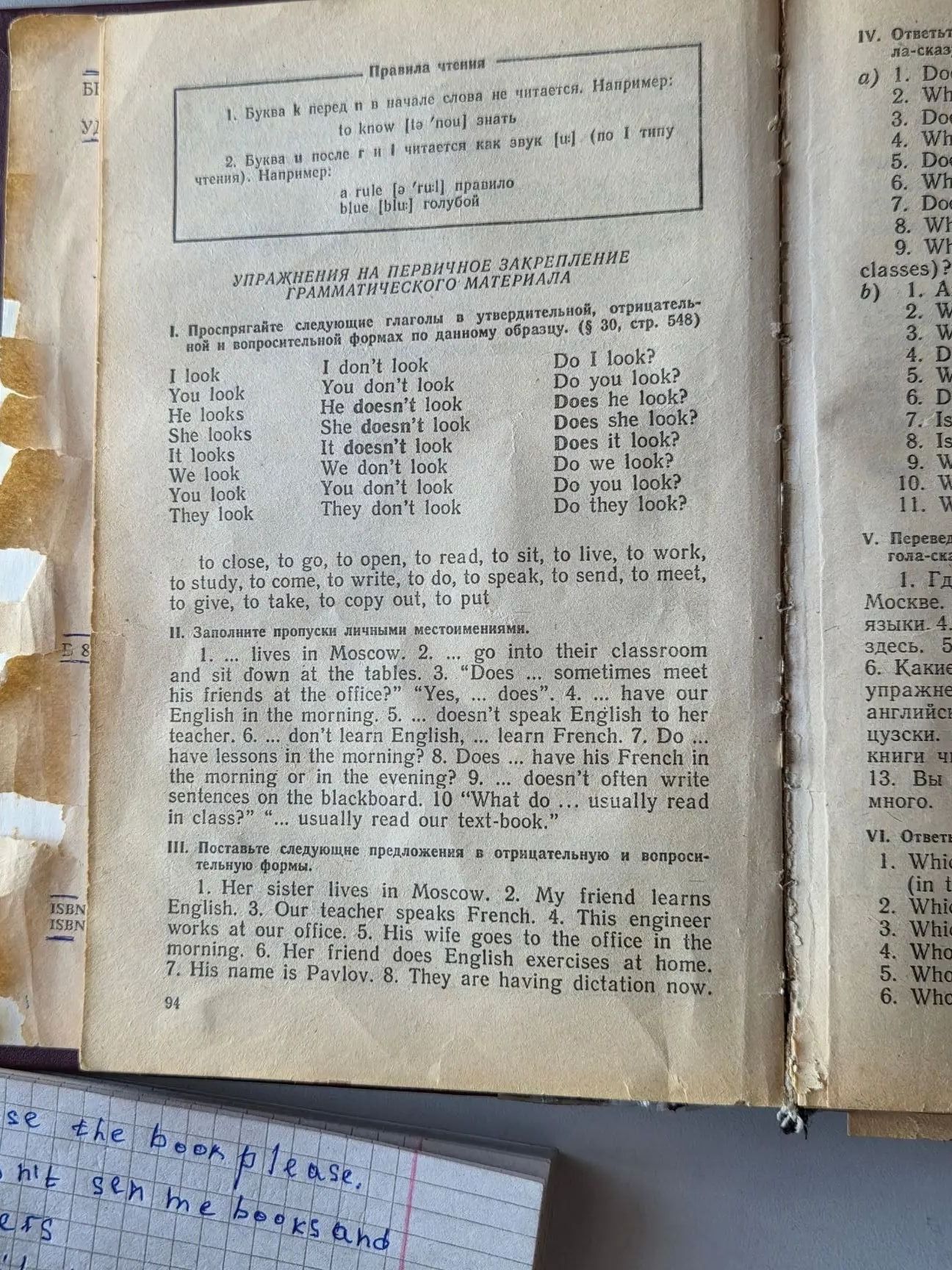
Перевод задания: Проспрягайте следующие глаголы в утвердительной, отрицательной и вопросительной формах по данному образцу.
Порядок местоимений в каждой строке: I, you, he, she, it, we, you, they.
| Глагол | Утвердительная форма | Отрицательная форма | Вопросительная форма |
|---|---|---|---|
| to close (закрывать) | I/you/we/they close; he/she/it closes. | I/you/we/they don’t close; he/she/it doesn’t close. | Do I/you/we/they close? Does he/she/it close? |
| to go (идти) | I/you/we/they go; he/she/it goes. | I/you/we/they don’t go; he/she/it doesn’t go. | Do I/you/we/they go? Does he/she/it go? |
| to open (открывать) | I/you/we/they open; he/she/it opens. | I/you/we/they don’t open; he/she/it doesn’t open. | Do I/you/we/they open? Does he/she/it open? |
| to read (читать) | I/you/we/they read; he/she/it reads. | I/you/we/they don’t read; he/she/it doesn’t read. | Do I/you/we/they read? Does he/she/it read? |
| to sit (сидеть) | I/you/we/they sit; he/she/it sits. | I/you/we/they don’t sit; he/she/it doesn’t sit. | Do I/you/we/they sit? Does he/she/it sit? |
| to live (жить) | I/you/we/they live; he/she/it lives. | I/you/we/they don’t live; he/she/it doesn’t live. | Do I/you/we/they live? Does he/she/it live? |
| to work (работать) | I/you/we/they work; he/she/it works. | I/you/we/they don’t work; he/she/it doesn’t work. | Do I/you/we/they work? Does he/she/it work? |
| to study (учиться) | I/you/we/they study; he/she/it studies. | I/you/we/they don’t study; he/she/it doesn’t study. | Do I/you/we/they study? Does he/she/it study? |
| to come (приходить) | I/you/we/they come; he/she/it comes. | I/you/we/they don’t come; he/she/it doesn’t come. | Do I/you/we/they come? Does he/she/it come? |
| to write (писать) | I/you/we/they write; he/she/it writes. | I/you/we/they don’t write; he/she/it doesn’t write. | Do I/you/we/they write? Does he/she/it write? |
| to do (делать) | I/you/we/they do; he/she/it does. | I/you/we/they don’t do; he/she/it doesn’t do. | Do I/you/we/they do? Does he/she/it do? |
| to speak (говорить) | I/you/we/they speak; he/she/it speaks. | I/you/we/they don’t speak; he/she/it doesn’t speak. | Do I/you/we/they speak? Does he/she/it speak? |
| to send (посылать) | I/you/we/they send; he/she/it sends. | I/you/we/they don’t send; he/she/it doesn’t send. | Do I/you/we/they send? Does he/she/it send? |
| to meet (встречать) | I/you/we/they meet; he/she/it meets. | I/you/we/they don’t meet; he/she/it doesn’t meet. | Do I/you/we/they meet? Does he/she/it meet? |
| to give (давать) | I/you/we/they give; he/she/it gives. | I/you/we/they don’t give; he/she/it doesn’t give. | Do I/you/we/they give? Does he/she/it give? |
| to take (брать) | I/you/we/they take; he/she/it takes. | I/you/we/they don’t take; he/she/it doesn’t take. | Do I/you/we/they take? Does he/she/it take? |
| to copy out (переписывать) | I/you/we/they copy out; he/she/it copies out. | I/you/we/they don’t copy out; he/she/it doesn’t copy out. | Do I/you/we/they copy out? Does he/she/it copy out? |
| to put (класть) | I/you/we/they put; he/she/it puts. | I/you/we/they don’t put; he/she/it doesn’t put. | Do I/you/we/they put? Does he/she/it put? |
Правило: в 3-м лице единственного числа к смысловому глаголу добавляется -s или -es. После doesn’t и does используется начальная форма глагола.
Перевод результата: Во всех предложениях используются формы настоящего простого времени: утвердительная, отрицательная и вопросительная.
