
 Алгебра
 Английский
 Биология
 География
 Геометрия
 История
 Русский
 Обществознание
 Физика
 Химия
Химия Информатика
 Литература
 Математика
Observe the images and describe the structure of the plant cell. What is its function?
Ответ:
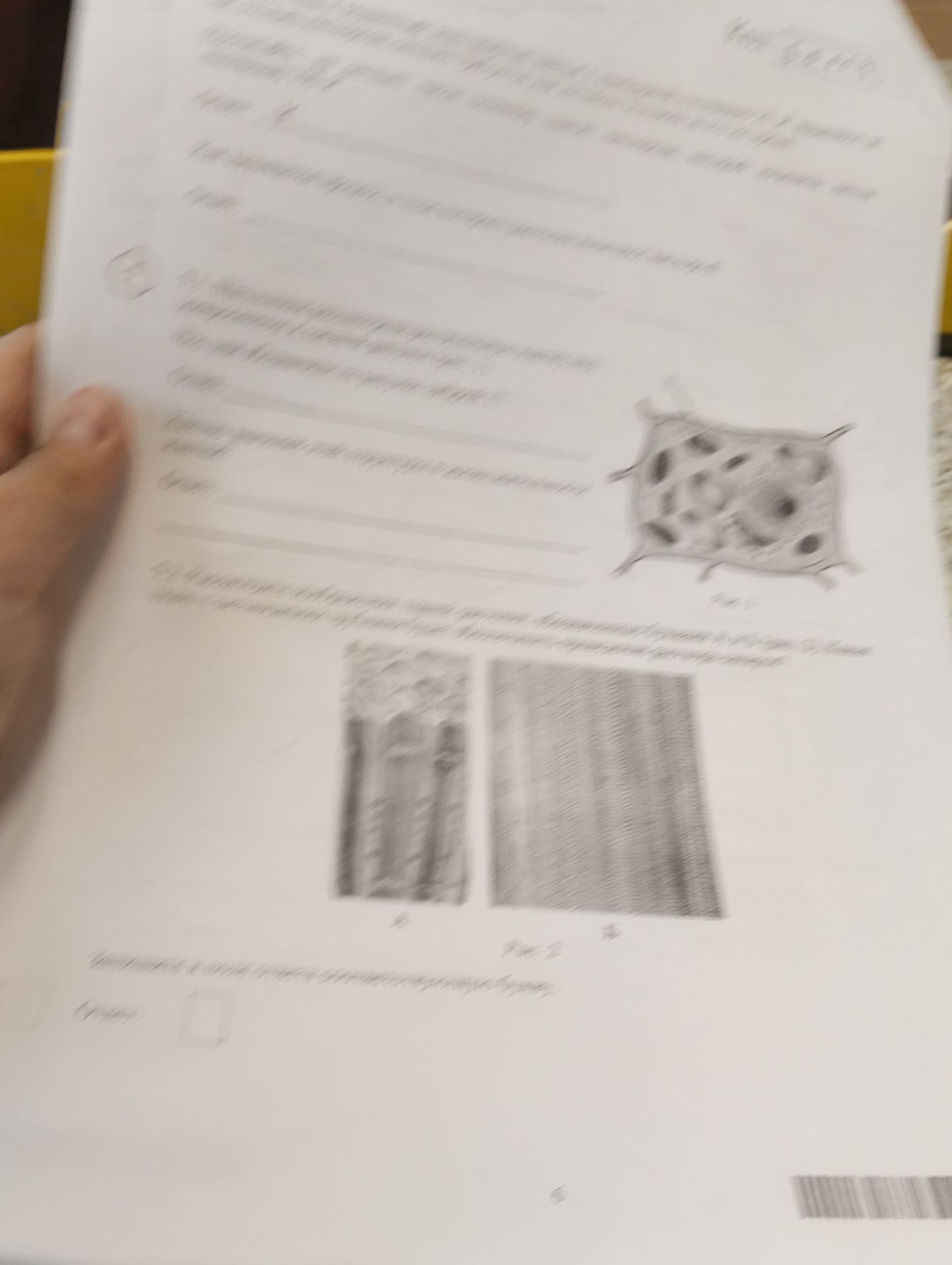
Here are two images: Fig. 1 shows a plant cell and Fig. 2 shows a plant tissue.
Plant Cell Structure (Fig. 1):
- Cell Wall: The rigid outer layer that provides structural support and protection to the plant cell.
- Cell Membrane: Located inside the cell wall, it regulates the passage of substances into and out of the cell.
- Cytoplasm: The jelly-like substance filling the cell, in which organelles are suspended.
- Nucleus: Contains the cell's genetic material (DNA) and controls cell activities.
- Vacuole: A large central vacuole stores water, nutrients, and waste products, and helps maintain turgor pressure.
- Chloroplasts: The sites of photosynthesis, where light energy is converted into chemical energy (food).
- Mitochondria: Responsible for cellular respiration, generating energy for the cell.
Plant Tissue Structure (Fig. 2):
Fig. 2 shows a cross-section of a plant tissue, likely a vascular bundle, exhibiting organized cells in columns, characteristic of xylem or phloem, responsible for transport.
Function of Plant Cell:
The primary functions of a plant cell are photosynthesis (converting light energy into food), cellular respiration (generating energy), providing structural support (due to the cell wall and turgor pressure), and transport of substances within the plant.
Answer: The images display a typical plant cell with its organelles and a section of plant tissue. The plant cell's function is crucial for photosynthesis, energy production, structural integrity, and nutrient transport, enabling the plant to survive and grow.
