
Вопрос:

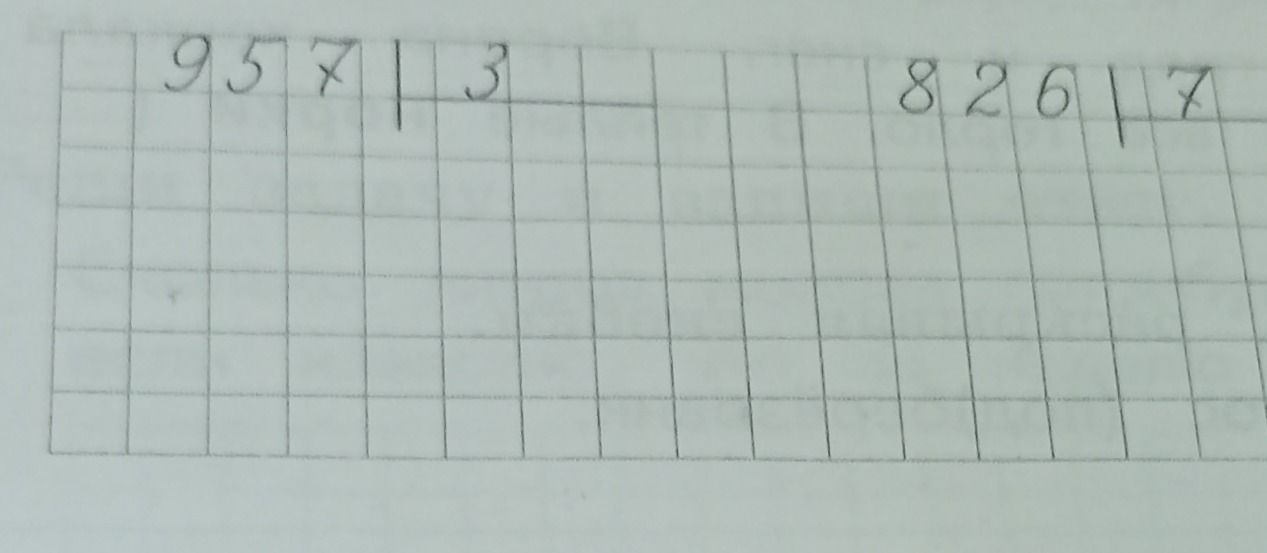
Perform the division shown in the image.

Смотреть решения всех заданий с листа

Ответ:

Problem:

The image shows a division problem. It appears to be a long division setup.

Analysis:

The problem is presented in a long division format. The dividend is 1,400, and the divisor is 3. The first step shows 300 divided by 3, which is 100, but the notation suggests a different calculation.

Step-by-step calculation:

Let's re-examine the setup as a standard long division:

  1. We are dividing 1400 by 3.
  2. Look at the first digit of the dividend, '1'. It's less than 3, so we take the first two digits, '14'.
  3. How many times does 3 go into 14? It goes 4 times (3 * 4 = 12).
  4. Write '4' above the '4' in the dividend.
  5. Subtract 12 from 14, which leaves 2.
  6. Bring down the next digit from the dividend, '0', to make 20.
  7. How many times does 3 go into 20? It goes 6 times (3 * 6 = 18).
  8. Write '6' above the '0' in the dividend.
  9. Subtract 18 from 20, which leaves 2.
  10. Bring down the last digit from the dividend, '0', to make 20.
  11. How many times does 3 go into 20? It goes 6 times (3 * 6 = 18).
  12. Write '6' above the last '0' in the dividend.
  13. Subtract 18 from 20, which leaves 2.
  14. The remainder is 2.

The result of the division is 466 with a remainder of 2.

Interpreting the image's notation:

The image seems to be showing a variation or an intermediate step of long division. The number '3' is circled, indicating it's the divisor. The number '1,400' is the dividend. The line above '1,400' and '74' suggests the quotient and potentially a remainder or further calculation. The numbers '0052' below the dividend are confusing in this context unless they represent subtractions or partial dividends in a non-standard notation. However, if we strictly interpret the final line under the division bar as '74', this does not directly align with the standard long division result of 466 R 2.

Let's assume the image is depicting a step-by-step calculation where:

  • The '3' is the divisor.
  • The first part of the dividend considered is '300'.
  • '52' might be a partial quotient or intermediate number.
  • The number '74' below the line is unclear in standard long division context. It might be a remainder, or part of a larger calculation not fully shown.

Given the visual layout, it's difficult to definitively determine the intended calculation without more context or standard notation.

Assuming a standard division of 1400 by 3:

The calculation would be:

1400 ÷ 3 = 466 with a remainder of 2

Or, as a decimal: 1400 ÷ 3 = 466.666...

ГДЗ по фото 📸
Подать жалобу Правообладателю