
 Алгебра
 Английский
 Биология
 География
 Геометрия
 История
 Русский
 Обществознание
 Физика
 Химия
Химия Информатика
 Литература
 Математика
Вопрос:
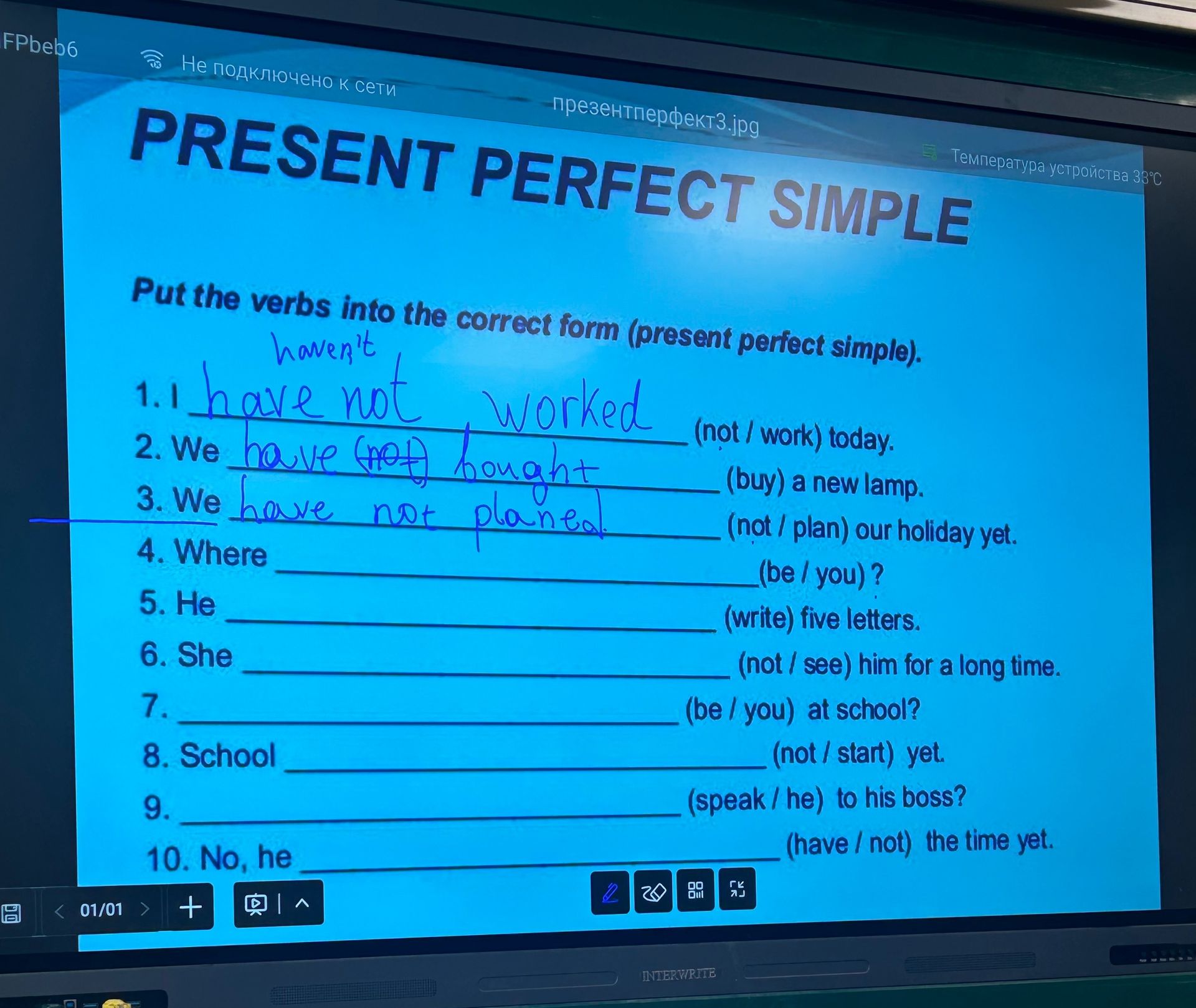
Put the verbs into the correct form (present perfect simple).
Ответ:
Present Perfect Simple
The present perfect simple tense is formed using:
Subject + have/has + past participle of the verb
Negative form: Subject + have/has + not + past participle of the verb
Completed Exercise:
- I have not worked today. (not / work)
- We have bought a new lamp. (buy)
- We have not planned our holiday yet. (not / plan)
- Where have you been? (be / you)
- He has written five letters. (write)
- She has not seen him for a long time. (not / see)
- Has he been at school? (be / you)
- School has not started yet. (not / start)
- Has he spoken to his boss? (speak / he)
- No, he has not had the time yet. (have / not)
