
 Алгебра
 Английский
 Биология
 География
 Геометрия
 История
 Русский
 Обществознание
 Физика
 Химия
Химия Информатика
 Литература
 Математика
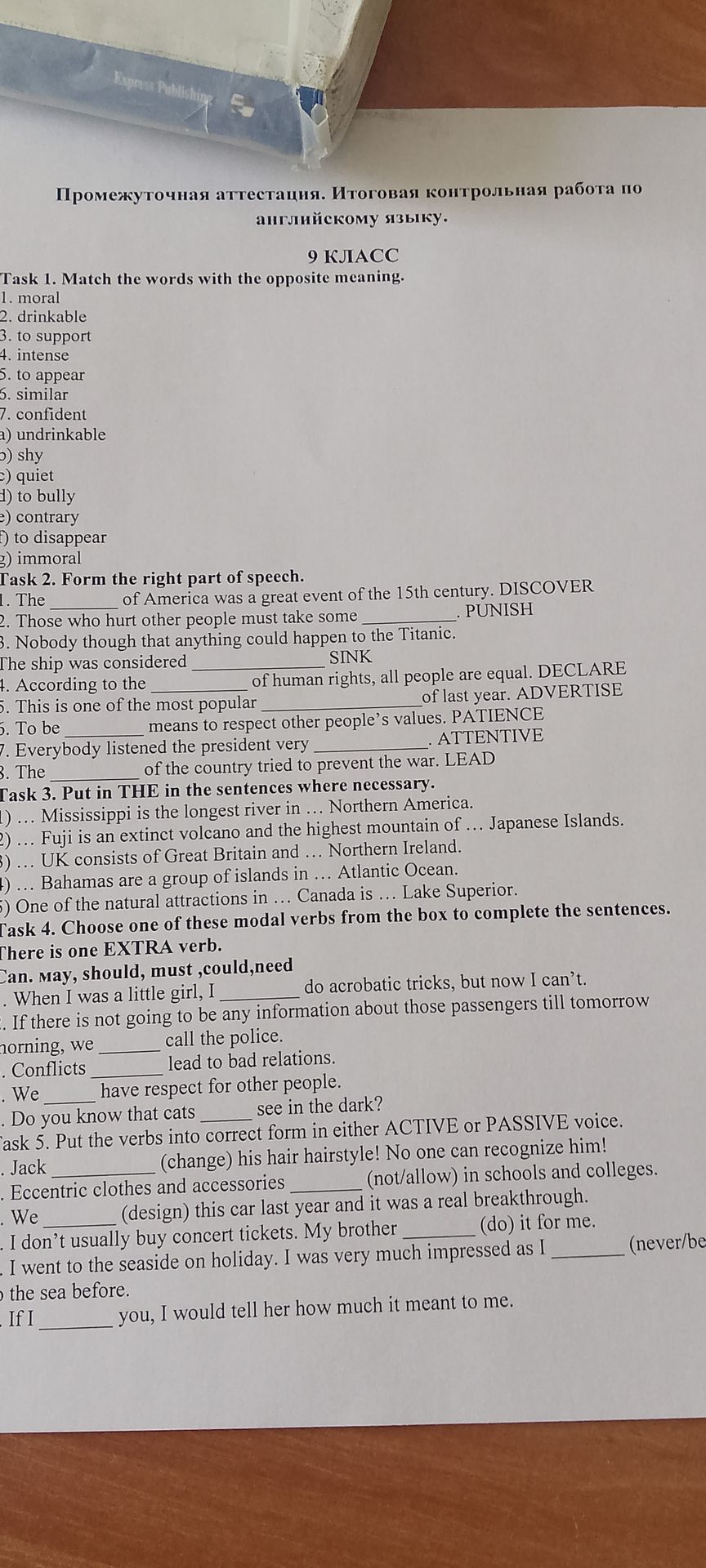
Task 3. Put in THE in the sentences where necessary.
Ответ:
Task 3. Use of 'THE'
- The Mississippi is the longest river in Northern America. (Geographical feature - river)
- Fuji is an extinct volcano and the highest mountain of the Japanese Islands. (Specific geographical region/group)
- The UK consists of Great Britain and Northern Ireland. (Specific country/political entity)
- Bahamas are a group of islands in the Atlantic Ocean. (Ocean)
- One of the natural attractions in Canada is Lake Superior. (No 'the' needed before 'Lake Superior' as it's a proper noun for a lake. However, 'the' is often used before names of seas, gulfs, and sometimes large lakes like Lake Superior in certain contexts, but it's not strictly mandatory here. Let's stick to the most common rule: no 'the' before most lake names unless part of a larger geographical name like 'the Great Lakes'.)
Note on item 5: While 'Lake Superior' is a proper noun, sometimes 'the' is used with names of major lakes when referring to them as unique geographical features. However, the most standard rule is not to use 'the' before names of lakes, rivers, and mountains unless they are part of a larger geographical name or used in a specific context. Given the other examples, it's safer to omit 'the' here.
Revised answer for item 5: One of the natural attractions in Canada is Lake Superior.
Final Answer for Task 3:
- The Mississippi is the longest river in Northern America.
- Fuji is an extinct volcano and the highest mountain of the Japanese Islands.
- The UK consists of Great Britain and Northern Ireland.
- Bahamas are a group of islands in the Atlantic Ocean.
- One of the natural attractions in Canada is Lake Superior.
Explanation: 'The' is used before names of rivers, oceans, mountain ranges, and some countries (like the UK, the USA). It's generally not used before names of continents, single mountains, single lakes, or most islands unless they form a group.
Похожие
- Task 1. Match the words with the opposite meaning.
- Task 2. Form the right part of speech.
- Task 4. Choose one of these modal verbs from the box to complete the sentences. There is one EXTRA verb. Can, may, should, must, could, need
- Task 5. Put the verbs into correct form in either ACTIVE or PASSIVE voice.
