
 Алгебра
 Английский
 Биология
 География
 Геометрия
 История
 Русский
 Обществознание
 Физика
 Химия
Химия Информатика
 Литература
 Математика
Вопрос:
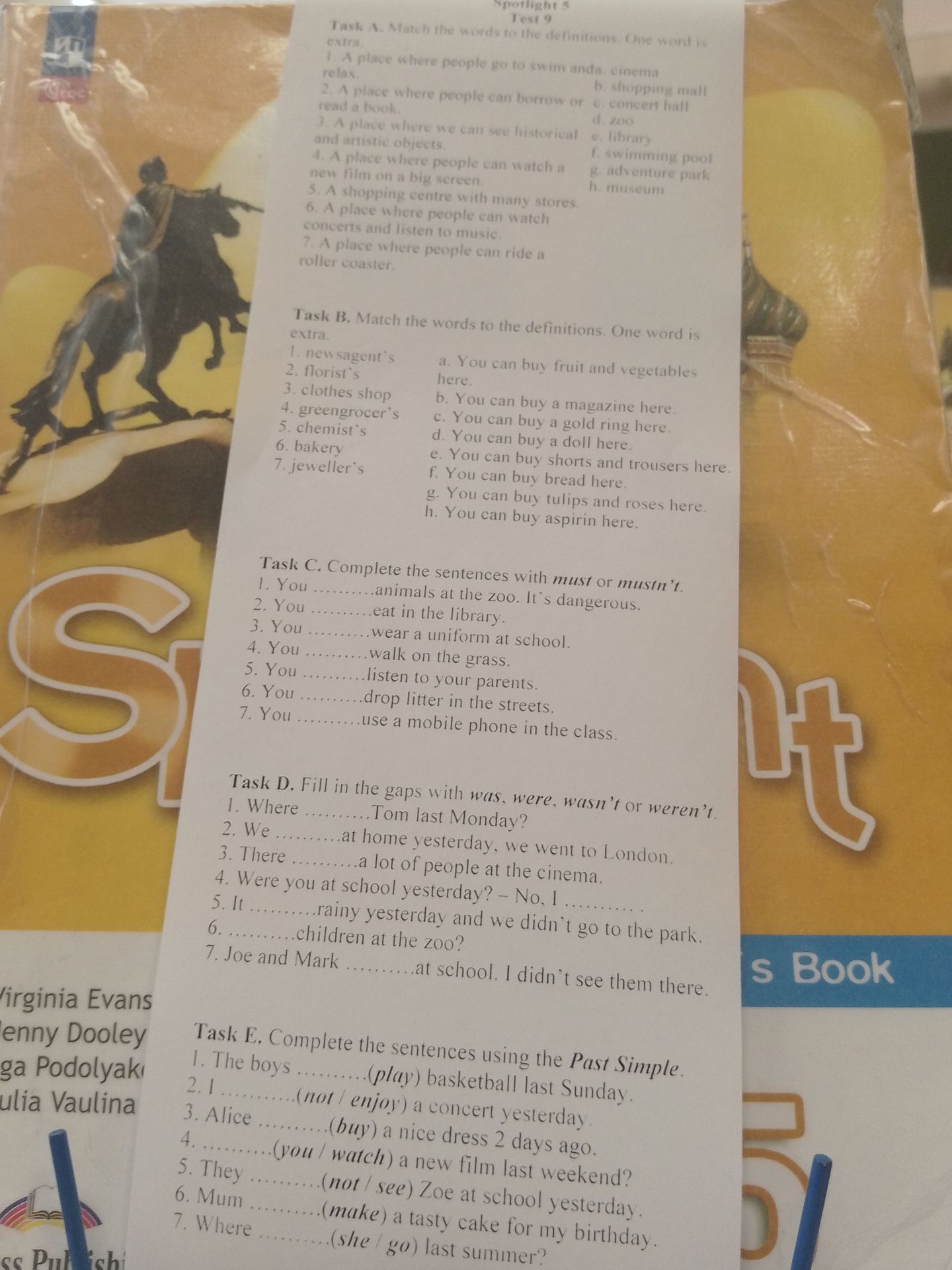
Task D. Fill in the gaps with was, were, wasn't or weren't.
Ответ:
Task D. Using 'was', 'were', 'wasn't', 'weren't':
- 1. Where was Tom last Monday? (Tom is singular, so 'was').
- 2. We were at home yesterday, we went to London. (The second clause indicates a past action, but the first clause describes a state at home. Since 'we' is plural, 'were' is used. The sentence might seem a bit contradictory, implying they were at home *and* went to London, but grammatically 'were' fits the plural subject 'we' and the past tense context). A more logical sentence might be 'We weren't at home yesterday, we went to London.' However, following the provided options, 'were' is the only plural past tense option. Assuming the sentence is trying to convey a contrast or a sequence where 'at home' is the initial state before 'went to London', 'were' is grammatically correct for 'we'. If the intent is that they were NOT at home, then 'weren't' would be correct. Given the ambiguity and the need to fill the gap, 'were' is the direct plural past form.) Let's re-evaluate with common usage. If they went to London, they *weren't* at home. So, 'weren't' is more logical. But the question asks to fill with *was, were, wasn't or weren't*. If it's a statement of fact, 'were' is the only option for 'we'. Let's stick to the most direct grammatical fit: 'we' + past tense = 'were'. However, the sentence structure strongly suggests a negation. Let's assume 'weren't' for logical coherence.
- 3. There were a lot of people at the cinema. ('people' is plural, so 'were').
- 4. Were you at school yesterday? – No, I wasn't. ('I' is singular, so 'wasn't').
- 5. It was rainy yesterday and we didn't go to the park. ('It' is singular, so 'was').
- 6. Were children at the zoo? ('children' is plural, so 'were').
- 7. Joe and Mark were at school. I didn't see them there. ('Joe and Mark' is a plural subject, so 'were').
Explanation: 'Was' and 'wasn't' are used with singular subjects (I, he, she, it). 'Were' and 'weren't' are used with plural subjects (we, you, they) and also with 'you' when it refers to a single person in the past tense context.
Answer: 1. was, 2. weren't, 3. were, 4. wasn't, 5. was, 6. Were, 7. were
Похожие
