
 Алгебра
 Английский
 Биология
 География
 Геометрия
 История
 Русский
 Обществознание
 Физика
 Химия
Химия Информатика
 Литература
 Математика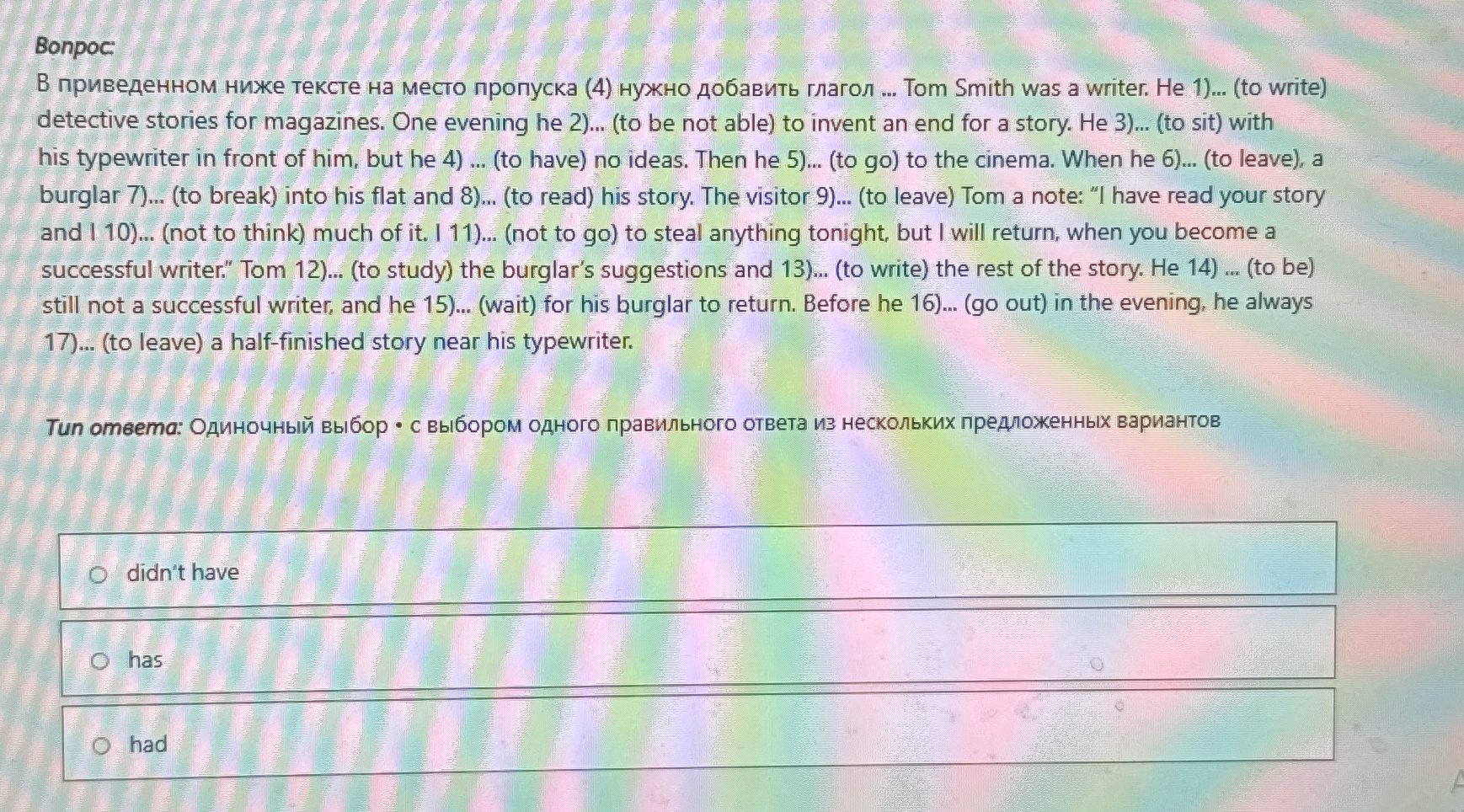
Ответ:
Решение:
Для заполнения пропуска (4) необходимо выбрать наиболее подходящий вариант из предложенных, который грамматически и по смыслу соответствует предложению.
- Текст описывает события, происходящие в прошлом.
- Предложение "...but he 4) ... (to have) no ideas." описывает состояние героя в тот момент.
- Из предложенных вариантов: "didn't have", "has", "had".
- Вариант "has" (настоящее время) не подходит, так как основное повествование ведется в прошедшем времени.
- Варианты "didn't have" (отрицание в прошедшем времени) и "had" (прошедшее время) подходят грамматически.
- Рассмотрим контекст: "his typewriter in front of him, but he ... no ideas." (его пишущая машинка перед ним, но у него ... никаких идей). В данном случае, более естественным является утверждение о наличии или отсутствии идей. Вариант "had" (имел) в контексте "but he had no ideas" (но у него не было идей) создает логическое противоречие. Правильнее использовать отрицательную форму прошедшего времени.
- Таким образом, наиболее подходящим является "didn't have".
Ответ: didn't have
