
 Алгебра
 Английский
 Биология
 География
 Геометрия
 История
 Русский
 Обществознание
 Физика
 Химия
Химия Информатика
 Литература
 Математика
Вопрос:
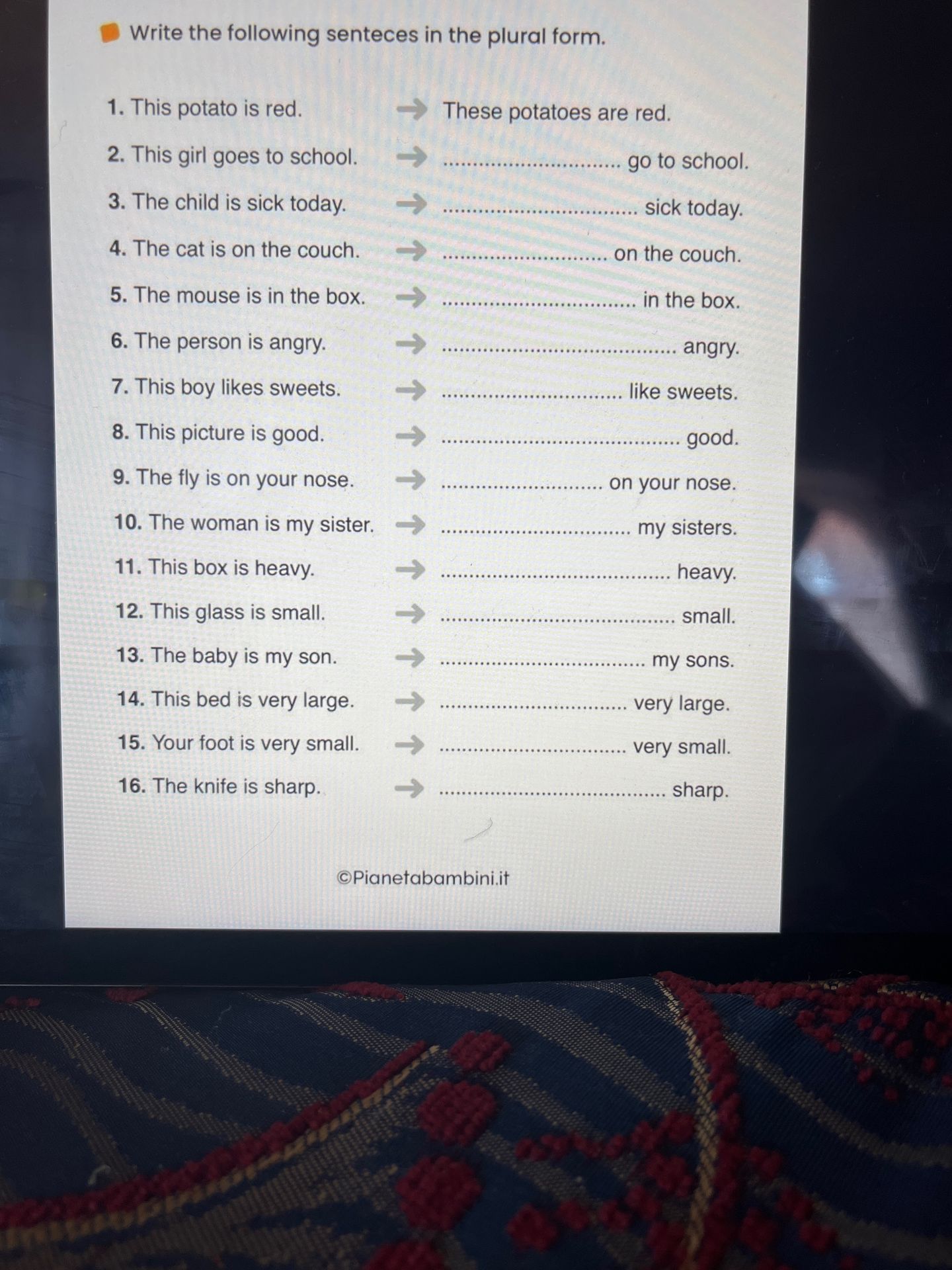
Write the following sentences in the plural form.
Ответ:
Решение:
Чтобы преобразовать предложения в форму множественного числа, нужно изменить подлежащее и сказуемое, а также согласовать их. Если существительное оканчивается на -o, то во множественном числе добавляется -es (potato - potatoes). Если существительное оканчивается на -s, -sh, -ch, -x, -z, то добавляется -es (box - boxes). Если существительное оканчивается на -y, то -y меняется на -ies (fly - flies), но если перед -y стоит гласная, то добавляется -s (boy - boys). Неправильные формы множественного числа (child - children, mouse - mice, foot - feet, person - people) и изменение глагола (is - are, goes - go) также учитываются.
- This potato is red. → These potatoes are red.
- This girl goes to school. → These girls go to school.
- The child is sick today. → The children are sick today.
- The cat is on the couch. → The cats are on the couch.
- The mouse is in the box. → The mice are in the box.
- The person is angry. → The people are angry.
- This boy likes sweets. → These boys like sweets.
- This picture is good. → These pictures are good.
- The fly is on your nose. → The flies are on your nose.
- The woman is my sister. → The women are my sisters.
- This box is heavy. → These boxes are heavy.
- This glass is small. → These glasses are small.
- The baby is my son. → The babies are my sons.
- This bed is very large. → These beds are very large.
- Your foot is very small. → Your feet are very small.
- The knife is sharp. → The knives are sharp.
Ответ: Соответствующие предложения в форме множественного числа приведены выше.
