
 Алгебра
 Английский
 Биология
 География
 Геометрия
 История
 Русский
 Обществознание
 Физика
 Химия
Химия Информатика
 Литература
 Математика
Вопрос:
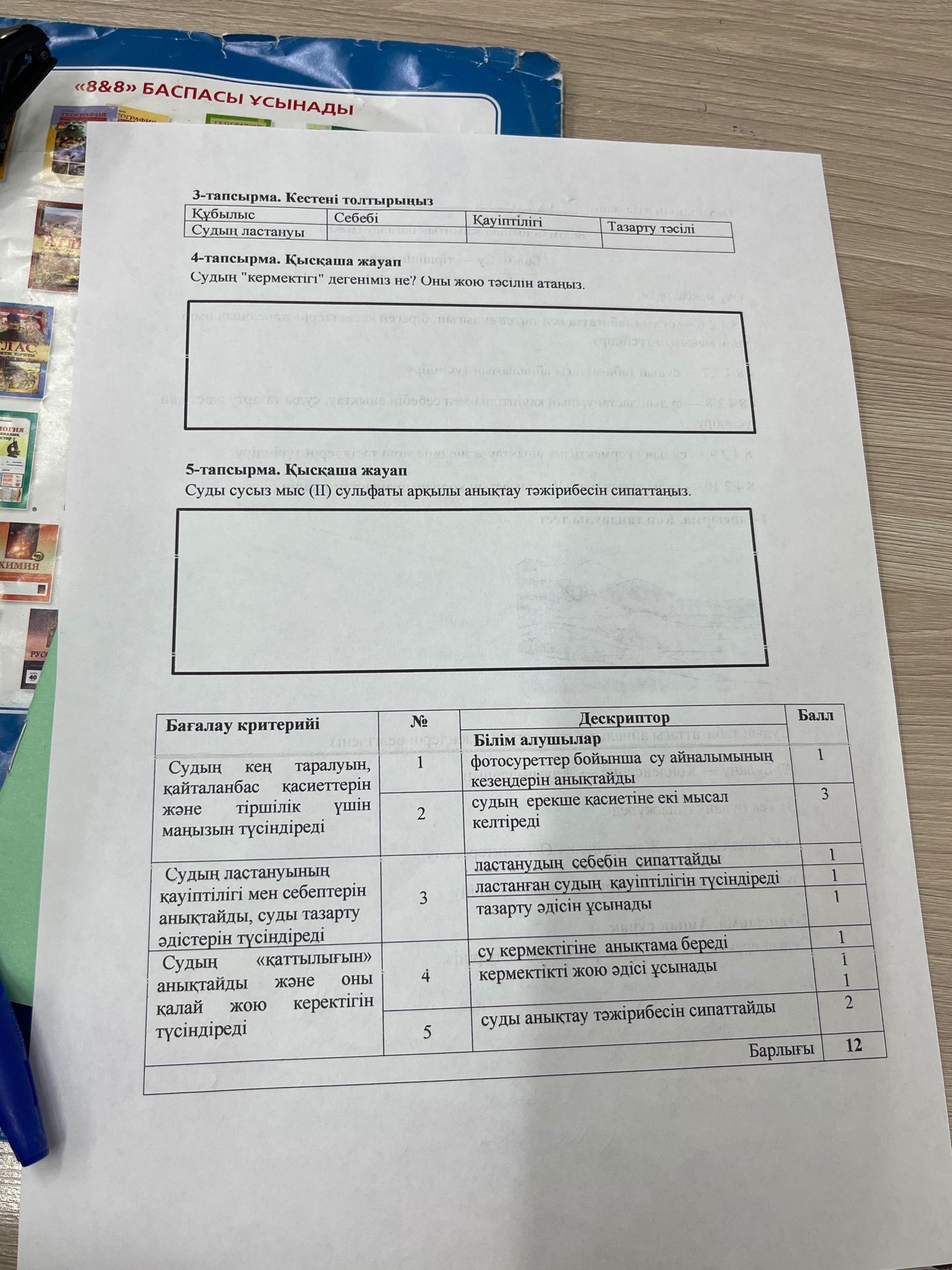
Answer "Task 4. Short answer". What is "water hardness"? Name its method of elimination.
Ответ:
Water Hardness:
Water hardness refers to the concentration of dissolved minerals, primarily calcium (Ca²⁺) and magnesium (Mg²⁺) ions, in water.
Methods of Elimination:
- Ion Exchange: This is the most common method. Water passes through a resin that exchanges calcium and magnesium ions for sodium (Na⁺) or potassium (K⁺) ions.
- Chemical Precipitation: Chemicals like lime (calcium hydroxide) or soda ash (sodium carbonate) are added to precipitate out the hardness minerals.
- Reverse Osmosis: This advanced filtration method removes most dissolved salts and minerals.
- Boiling (for temporary hardness): Heating water can cause dissolved bicarbonates of calcium and magnesium to precipitate out as carbonates, reducing temporary hardness.
Note: The image prompts for a method of elimination, and ion exchange is a primary one.
Похожие
