
 Алгебра
 Английский
 Биология
 География
 Геометрия
 История
 Русский
 Обществознание
 Физика
 Химия
 Информатика
 Литература
 Математика
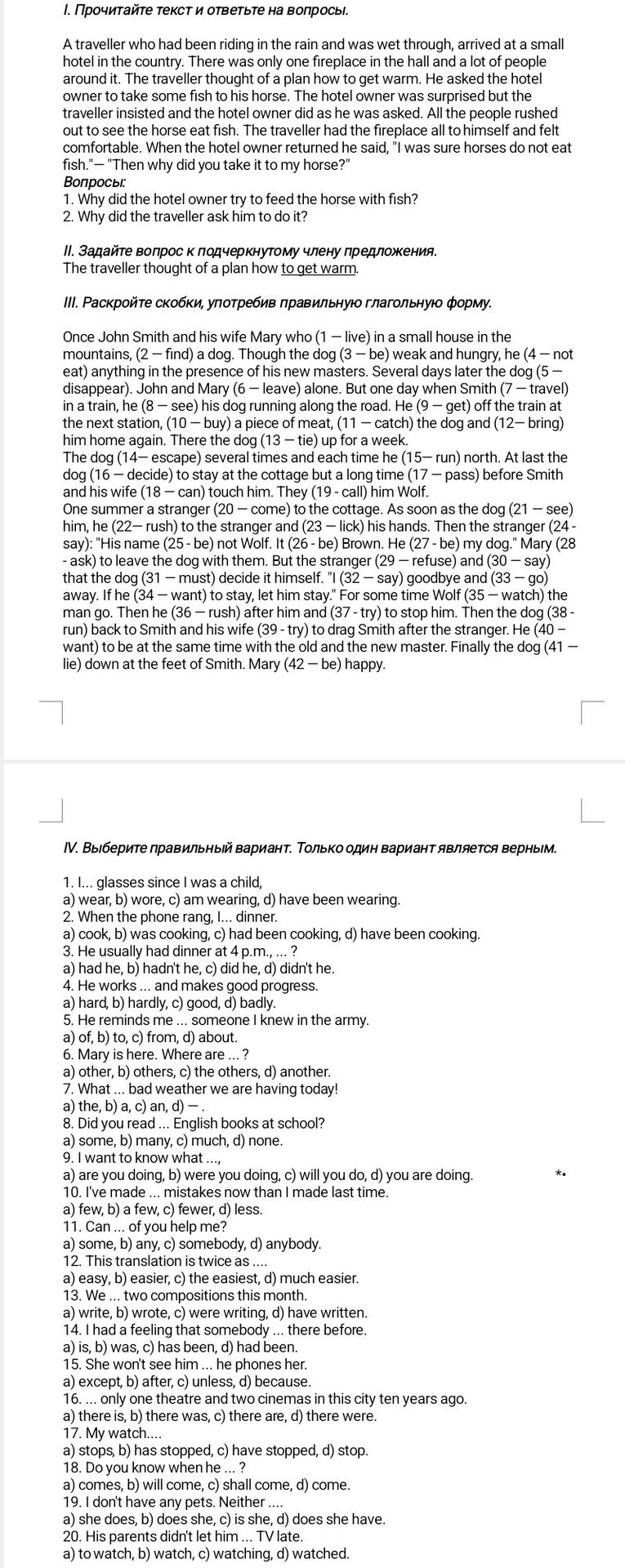
Ответ:
Перевод задания: Раскройте скобки, употребив правильную глагольную форму.
1. lived — жили в прошлом.
2. found.
3. was.
4. did not eat.
5. disappeared.
6. were left — остались одни.
7. was travelling — длительное действие в прошлом.
8. saw.
9. got.
10. bought.
11. caught.
12. brought.
13. was tied.
14. escaped.
15. ran.
16. decided.
17. passed.
18. could.
19. called — собаку звали Wolf.
20. came.
21. saw.
22. rushed.
23. licked.
24. said.
25. is.
26. is.
27. is.
28. asked.
29. refused.
30. said.
31. must.
32. will say.
33. will go.
34. wants.
35. watched.
36. rushed.
37. tried.
38. ran.
39. tried.
40. wanted.
41. lay.
42. was.
Заполненный текст:
Once, John Smith and his wife Mary who lived in a small house in the mountains, found a dog. Though the dog was weak and hungry, he did not eat anything in the presence of his new masters. Several days later the dog disappeared. John and Mary were left alone. But one day when Smith was travelling in a train, he saw his dog running along the road. He got off the train at the next station, bought a piece of meat, caught the dog and brought him home again. There the dog was tied up for a week. The dog escaped several times and each time he ran north. At last the dog decided to stay at the cottage but a long time passed before Smith and his wife could touch him. The dog called him Wolf. One summer a stranger came to the cottage. As soon as the dog saw him, he rushed to the stranger and licked his hands. Then the stranger said: “His name is not Wolf. It is Brown. He is my dog.” Mary asked to leave the dog with them. But the stranger refused and said that the dog must decide it himself. “I will say goodbye and will go away. If he wants to stay, let him stay.” For some time Wolf watched the man go. Then he rushed after him and tried to stop him. Then the dog ran back to Smith and his wife tried to drag Smith after the stranger. He wanted to be at the same time with the old and the new master. Finally the dog lay down at the feet of Smith. Mary was happy.
В предложении «The dog called him Wolf» местоимение him сохраняется согласно напечатанному тексту; по смыслу повествования, вероятно, имеется в виду имя собаки.
