I learned that Thomas More was executed for opposing the King's
divorce, and that the word "utopia" means "nowhere land" in Greek. I
also learned about the Cuban Missile Crisis and the historic decision
made by President Kennedy.
I concluded that power and integrity often contradict each other, as
shown by Thomas More's fate, and that laws are the foundation for any
organized society. I also concluded that terrorism is a global problem
that requires international cooperation to unite against it.
I found the text "An Ideal Society" (Utopia) most interesting because
it explored concepts of class distinction and private property. The
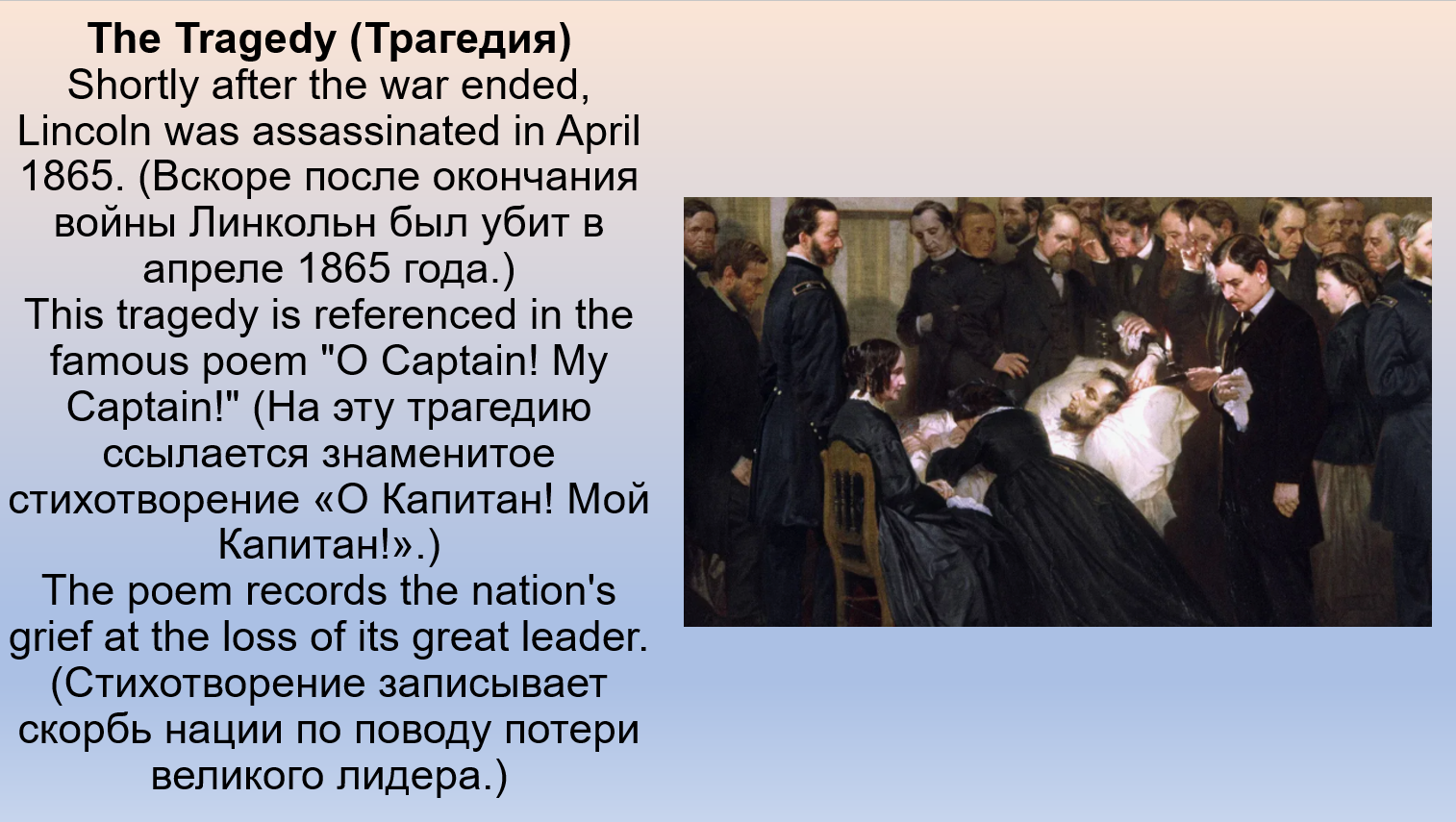
analysis of the poem "O Captain! My Captain!" was very informative
because it connected literature to a major historic event (Lincoln's
assassination).
what you practised doing in English (consider: reading, writing,
speaking, listening and use of English); (что ты практиковал в
английском (учитывай: чтение, письмо, говорение, аудирование и
использование английского);)
I practised reading complex non-fiction texts (e.g., Peter the
Great), writing a personal letter following strict rules, speaking about
politicians and social issues, and improving my use of English
(especially verb tenses and the words join/unite).
I see progress in my ability to discuss abstract concepts like policy
and politics. I also improved in using non-sexist language (e.g., using
their instead of his).
I still have problems with phrasal verbs (e.g., cut down on). I am
going to work on them by making short stories that include several new
phrasal verbs in context every week.
I can use the vocabulary about civil rights (e.g., right to vote,
right to equality) and government functions (e.g., forms the budget,
promotes justice) in social studies or debate classes.
I enjoyed preparing the project presentation (on the Printing Press
from Unit 1) the most because it was creative. I enjoyed practising the
confused words (e.g., historic/historical) and writing the letters the
least because the rules were very strict.

 Алгебра
 Английский
 Биология
 География
 Геометрия
 История
 Русский
 Обществознание
 Физика
 Химия
Химия Информатика
 Литература
 Математика