
 Алгебра
 Английский
 Биология
 География
 Геометрия
 История
 Русский
 Обществознание
 Физика
 Химия
Химия Информатика
 Литература
 Математика
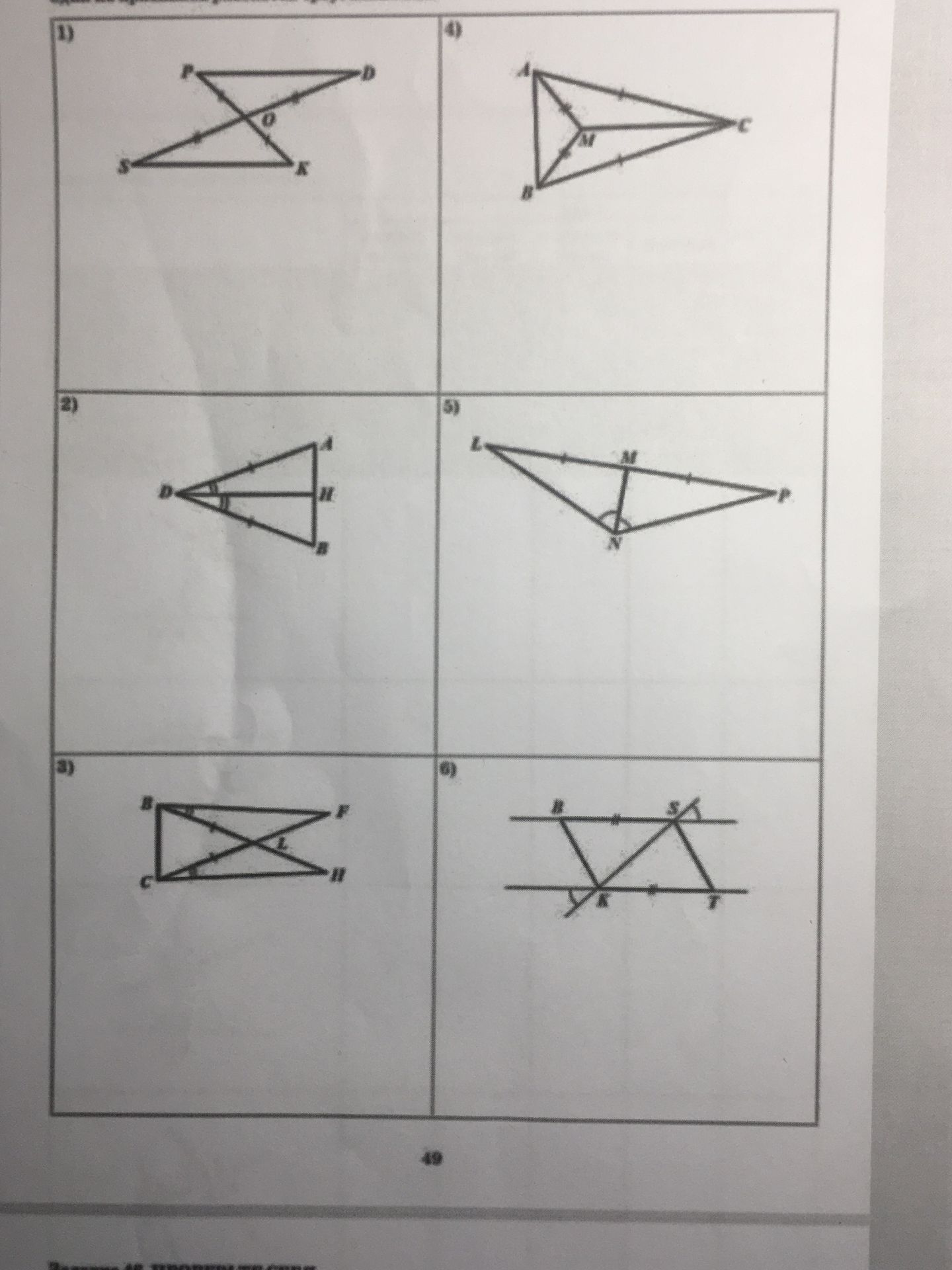
5) Based on the markings, identify the type of triangle LNP and the role of segment MN.
Ответ:
5) Analysis:
In the given figure, we have a triangle LNP with a point M on the side LP and a segment MN drawn from M to vertex N.
The markings indicate:
- Segment LM is equal to segment MP (indicated by single tick marks). This means that point M is the midpoint of side LP.
- Segment LN is equal to segment NP (indicated by double tick marks). This means that triangle LNP is an isosceles triangle with the base LP.
- The angle at vertex N is marked with a right angle symbol, but this symbol is at the vertex N, not indicating that MN is perpendicular to LP or that LN is perpendicular to NP. The arc at N indicates an angle, and the perpendicular symbol at M is not present. However, if we assume the right angle symbol is at N (angle LNP is 90 degrees), then triangle LNP is a right-angled isosceles triangle.
Let's re-examine the image. The right angle symbol is clearly at vertex N. The arc at N is indicating the angle. The markings on LN and NP indicate they are equal. Therefore, triangle LNP is an isosceles right-angled triangle.
The segment MN connects the midpoint M of the hypotenuse LP to the vertex N (the right angle).
Conclusions:
- Triangle LNP is an isosceles right-angled triangle (since LN = NP and angle LNP = 90 degrees).
- Segment MN is the median to the hypotenuse of the right-angled triangle LNP.
In a right-angled triangle, the median to the hypotenuse is half the length of the hypotenuse. Therefore, MN = LM = MP.
This also implies that triangle LMN and triangle PMN are isosceles triangles.
Conclusion: Triangle LNP is an isosceles right-angled triangle. MN is the median to the hypotenuse, and therefore MN = LM = MP.
Похожие
- 1) Find the relationship between the segments.
- 2) Based on the markings, what can be concluded about triangle ADB and segment DH?
- 3) Identify the congruent triangles and the relationship between the segments.
- 4) Determine the relationship between the segments in triangle ABC with point M.
- 6) Analyze the figure with parallel lines and transversal segments.
