
 Алгебра
 Английский
 Биология
 География
 Геометрия
 История
 Русский
 Обществознание
 Физика
 Химия
 Информатика
 Литература
 Математика
Ответ:
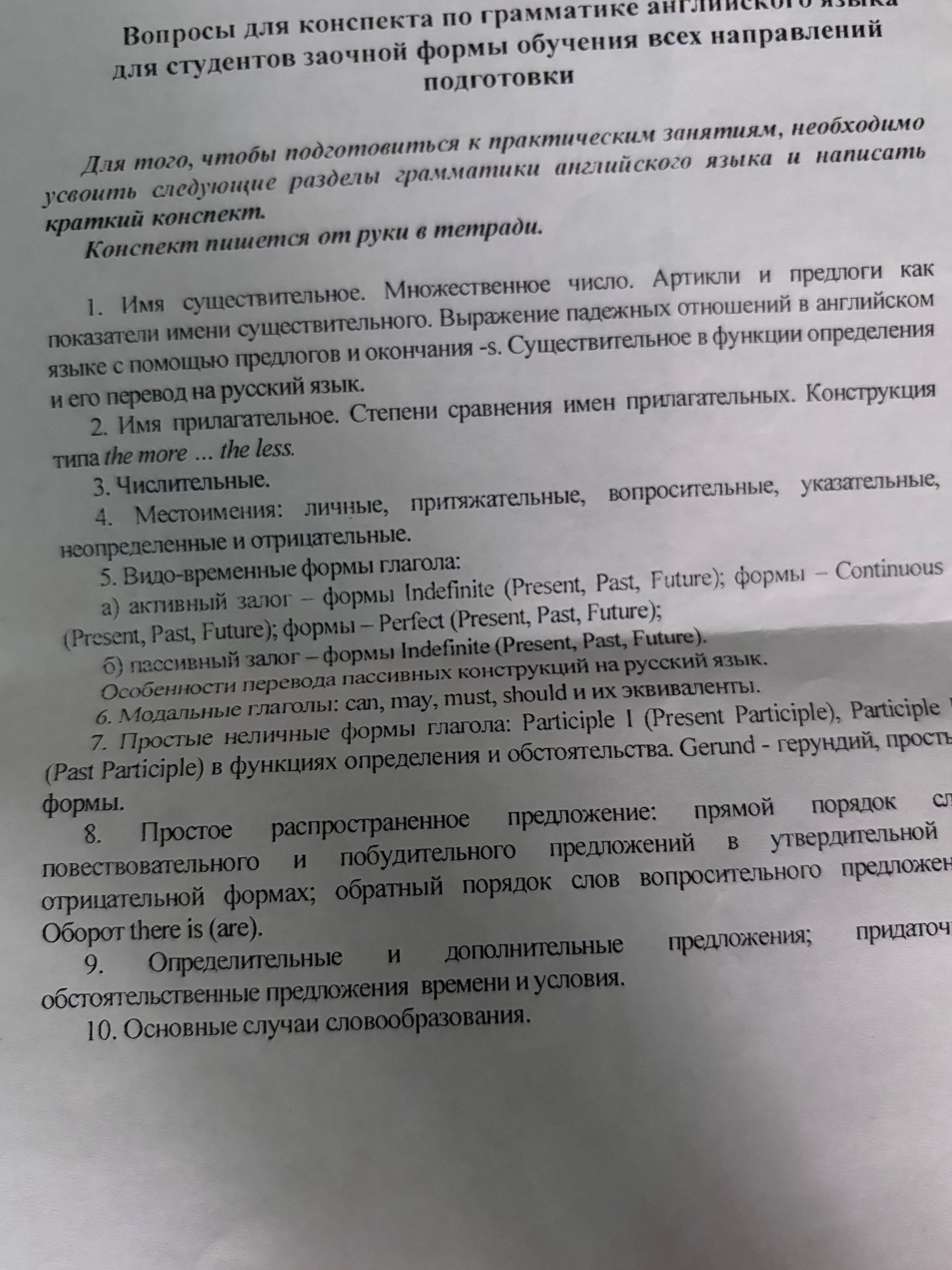
Перевод задания: Write a brief summary of the simple extended sentence, word order in affirmative and negative statements and commands, word order in questions, and the construction there is/are.
Word order. In an affirmative statement, the usual order is subject + verb + object or other complements: Tom reads books. Negatives use an auxiliary or modal verb with not: Tom does not read books. An affirmative command usually begins with the base form of the verb: Open the window. A negative command begins with do not or don't: Don't open the window.
In yes/no questions, the auxiliary or modal verb comes before the subject: Does Tom read? In questions with a question word, it usually comes before the auxiliary: What does Tom read? The construction there is is used with a singular noun and there are with a plural noun to say that something exists or is present: There is a book on the table.
Перевод ответа: Порядок слов. В утвердительном повествовательном предложении обычный порядок такой: подлежащее + сказуемое + дополнение или другие члены предложения: Tom reads books. — Том читает книги. Отрицание образуется с помощью вспомогательного или модального глагола с not: Tom does not read books. — Том не читает книги. Утвердительное побудительное предложение обычно начинается с начальной формы глагола: Open the window. — Открой окно. Отрицательное побудительное предложение начинается с do not или don't: Don't open the window. — Не открывай окно.
В общих вопросах вспомогательный или модальный глагол ставится перед подлежащим: Does Tom read? — Том читает? В специальных вопросах вопросительное слово обычно стоит перед вспомогательным глаголом: What does Tom read? — Что читает Том? Оборот there is употребляется с существительным в единственном числе, а there are — во множественном; он сообщает о наличии предмета: There is a book on the table. — На столе есть книга.
